

Refresh Your Tired Summer Containers for Fall
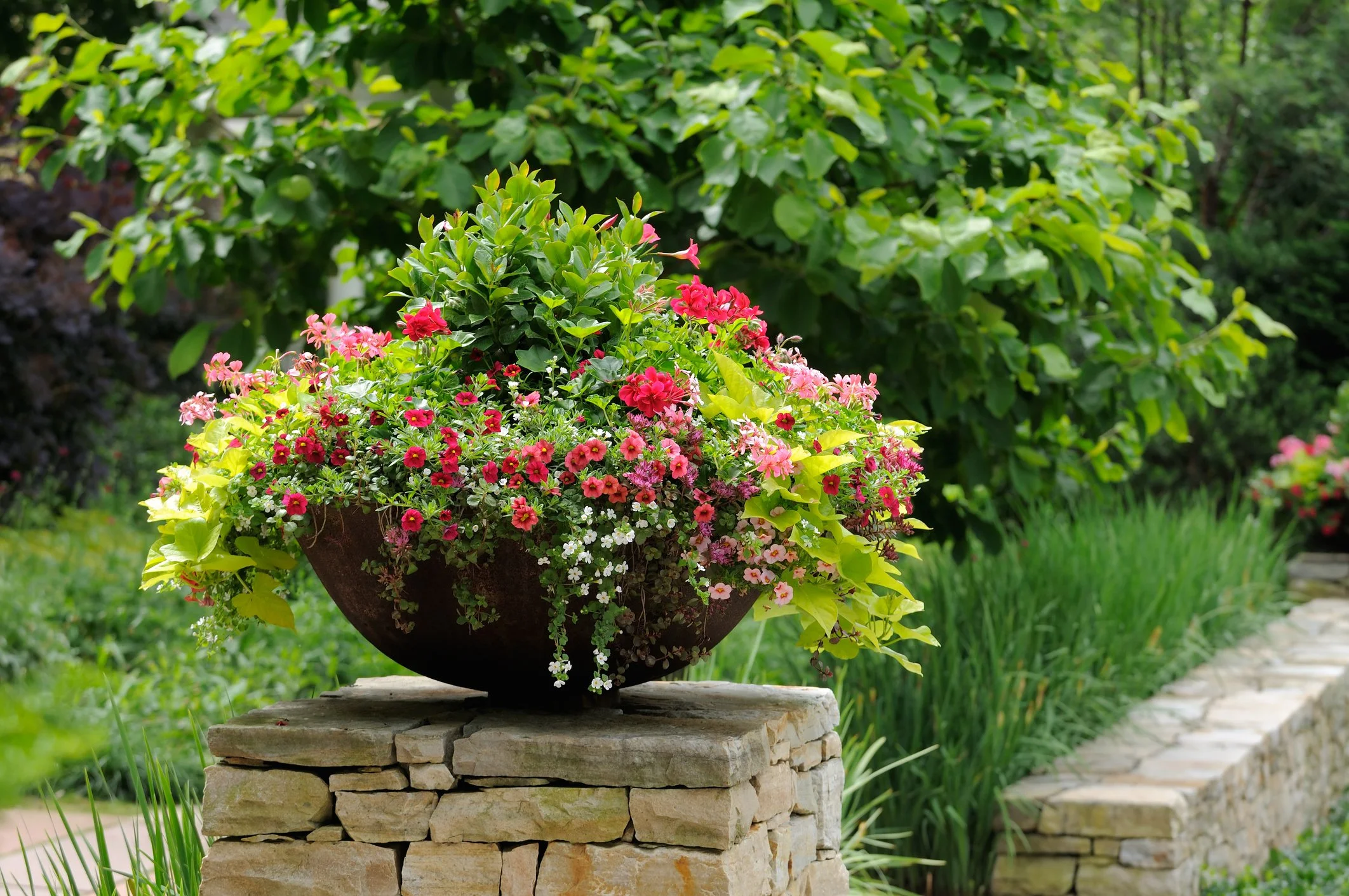
By late summer, even the most beautiful container gardens can begin to look tired. Petunias may be leggy, sweet potato vines may have taken over, and once-full combinations may have bare spots or faded flowers.
That does not mean you have to empty every pot and start over.
With a little pruning, a few well-chosen plants, and some fresh seasonal color, you can transform a worn summer container into a beautiful fall display. The secret is deciding what can stay, what needs to go, and which plants will carry the container through the changing season.
Begin With an Honest Evaluation
Before pulling everything out, step back and look at the entire container.
Ask yourself:
Which plants are still healthy?
Which plants are overgrown but could be trimmed?
Are any plants diseased or heavily infested with insects?
Is the arrangement still balanced?
Does the container need more height, fullness, or color?
Is water draining freely from the bottom?
A container may look exhausted because one struggling plant is distracting from everything around it. Removing that plant and filling the space with something fresh may be all it needs.
If most of the plants are declining, the soil smells sour, or the container is packed tightly with roots, a more complete replanting may be the better choice.
What Can Stay?
Some summer plants continue looking beautiful well into fall, especially in Middle Tennessee, where warm weather often lasts through September.
Healthy plants that may be worth keeping include:
Coleus
Ornamental grasses
Lantana
Caladiums
Begonias
Angelonia
Salvia
Sweet potato vine
Euphorbia
Crotons
Ferns
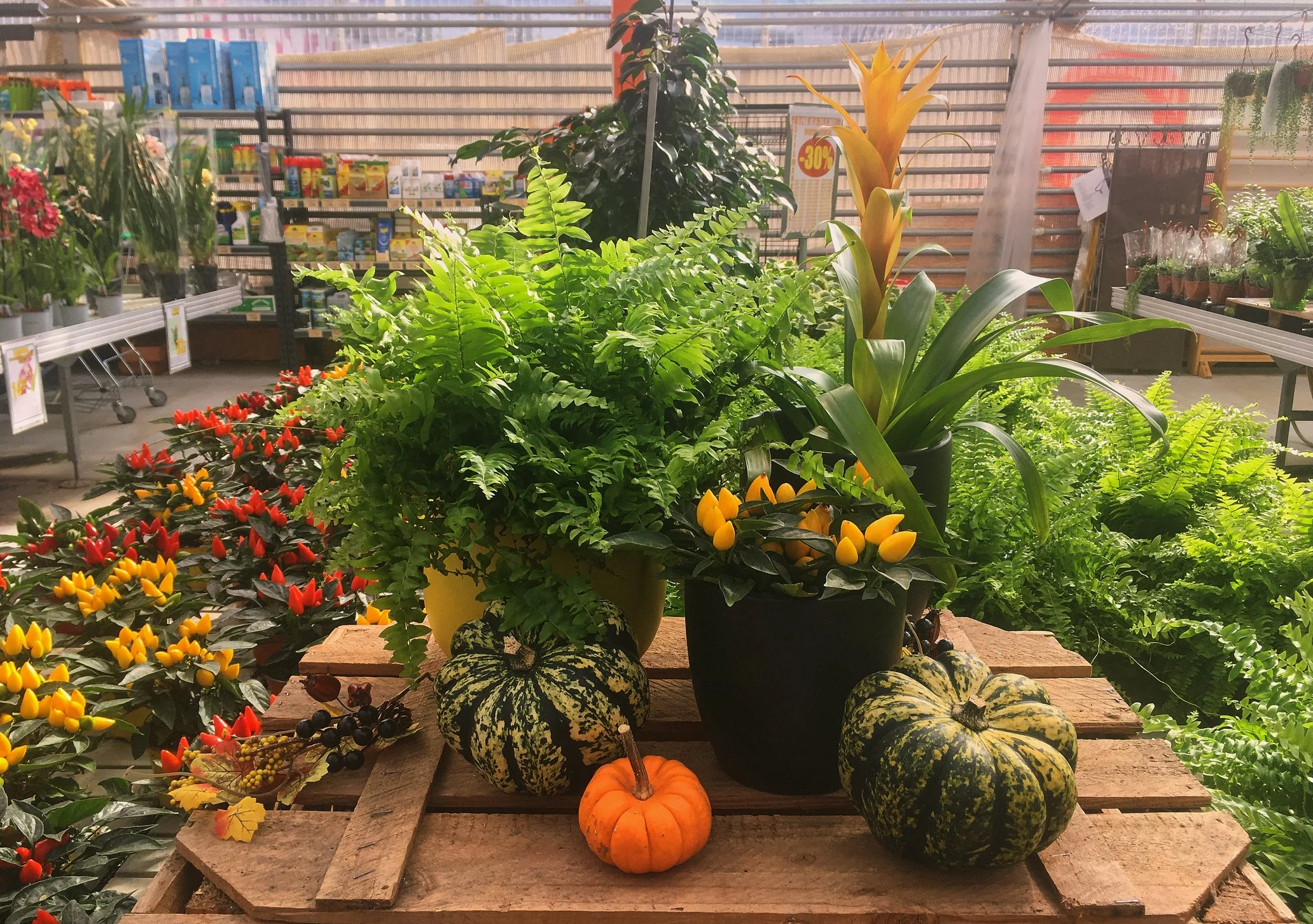
Ornamental peppers
Keep any plant that still looks healthy and works with your fall color palette. Burgundy coleus, copper-toned grasses, orange lantana, dark sweet potato vine, and colorful crotons transition especially well into autumn.
Remember that many of these are warm-season plants. They can remain attractive until cold temperatures arrive, but they will not tolerate a hard frost. Think of them as part of your early-fall display rather than permanent winter plants.
What Should Go?
Remove plants that are:
Mostly brown or bare
Severely leggy
Diseased
Heavily infested with pests
No longer flowering
Crowding healthier plants
Too large for the arrangement
Do not feel obligated to save a plant simply because part of it is still green. One worn-out plant can make the entire container look neglected.
When removing it, hold the surrounding plants in place and gently loosen the unwanted plant’s root ball with your fingers or a hand trowel. Try not to damage the roots of plants you plan to keep.
If a removed plant had a disease or serious insect problem, discard it rather than adding it to a home compost pile.
Give the Survivors a Trim
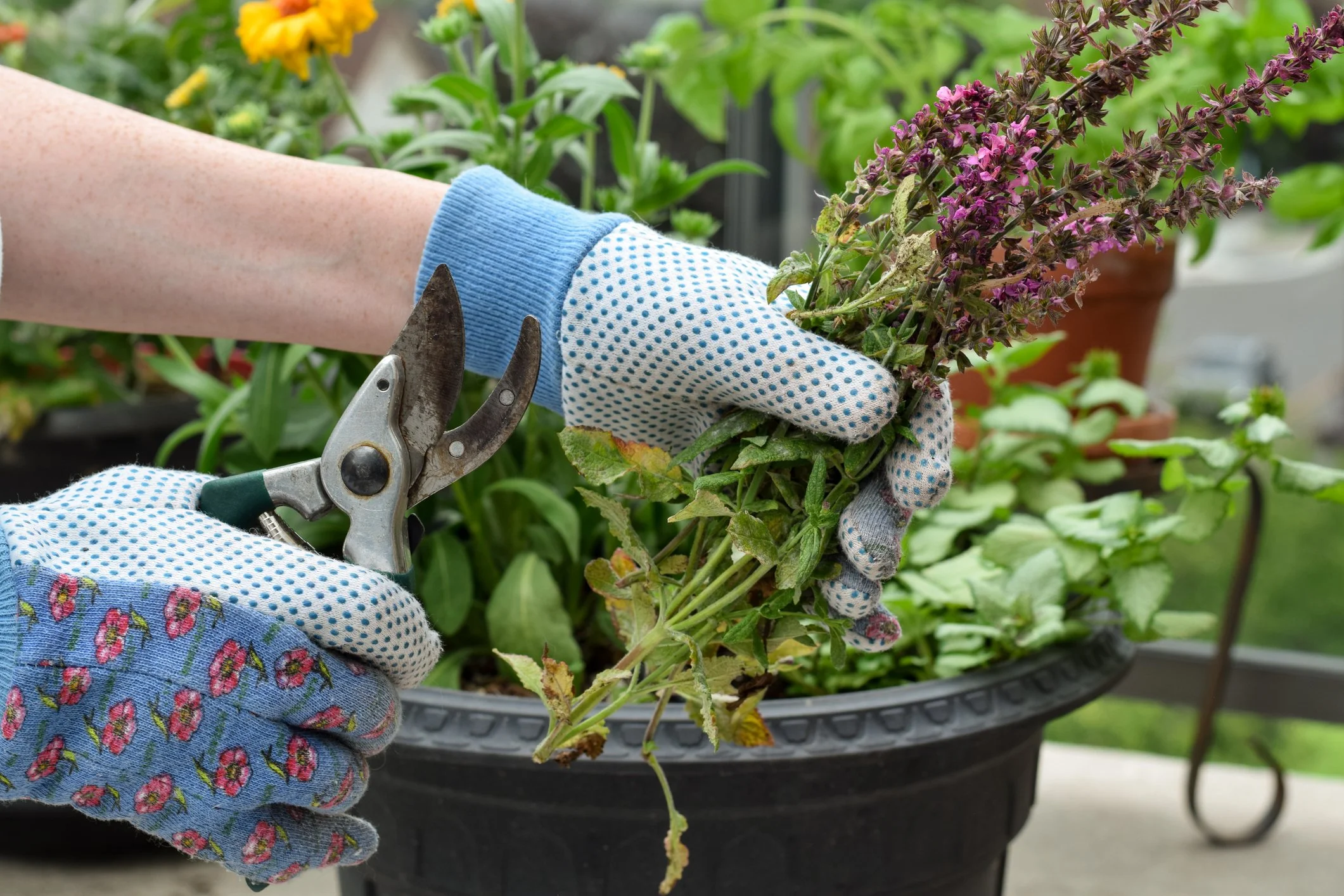
Many overgrown summer annuals can be renewed with a thoughtful haircut.
Remove faded blooms, yellow leaves, and damaged stems. Cut leggy growth back to a healthy set of leaves or branching point. Trailing plants such as sweet potato vine may be shortened considerably if they are overwhelming the pot.
Avoid cutting every plant to the same height. Preserve the natural layers of the arrangement so it still has height, fullness, and movement.
After pruning, water the container thoroughly. A light application of an appropriate fertilizer may encourage fresh growth, but do not overdo it. Plants grow more slowly as the days become shorter, and excessive fertilizer can produce weak growth.
Refresh the Potting Mix
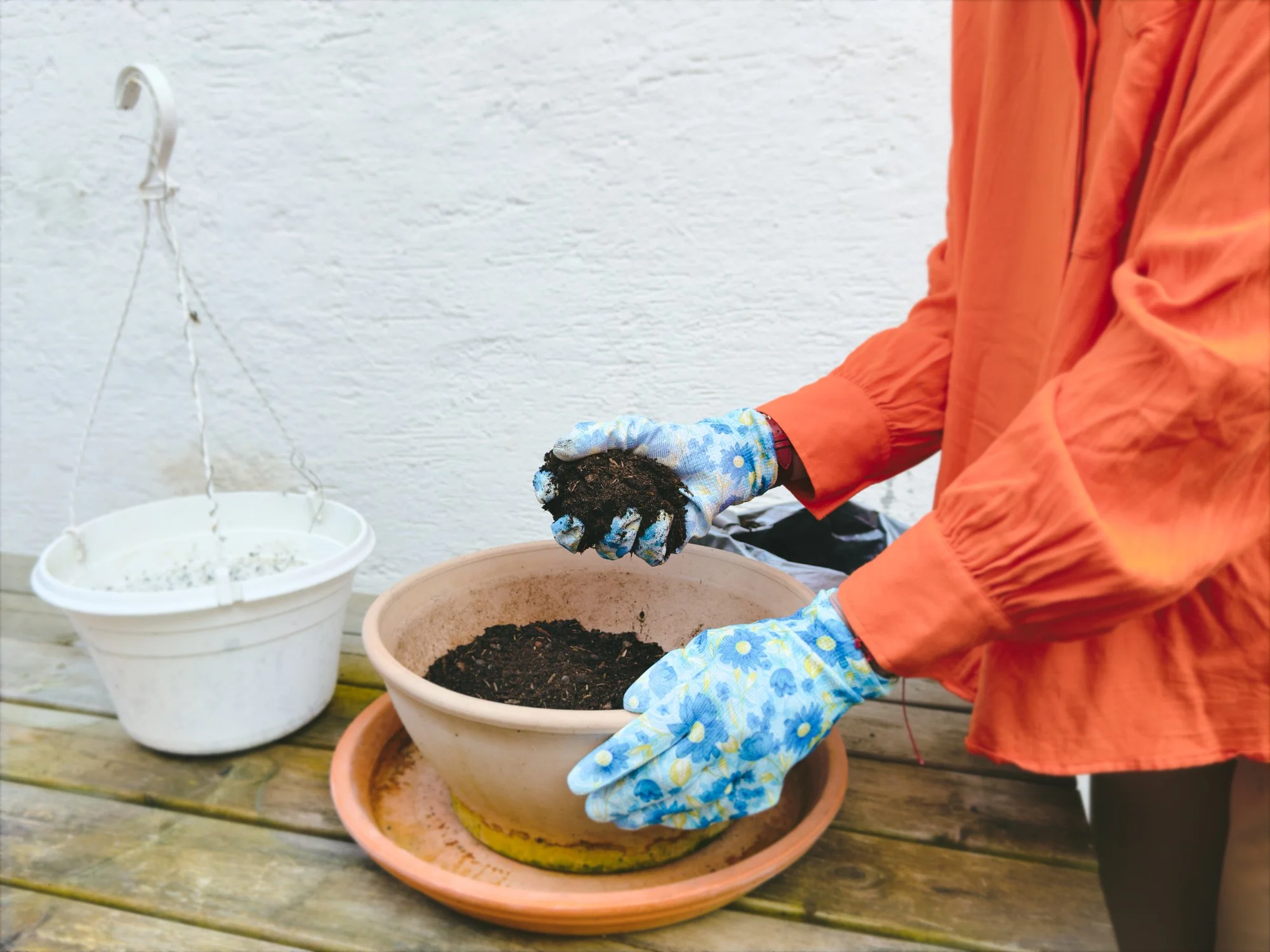
Container soil settles over the summer and may become packed with roots. After removing tired plants, loosen the open areas carefully and remove some of the exhausted potting mix.
Add fresh, high-quality potting mix to restore the soil level and fill gaps around new plants. Do not use heavy garden soil in a container because it can compact and interfere with drainage.
Check the drainage hole while you are working. Roots or debris may be preventing excess water from escaping.
If the entire container is densely rootbound, it may be best to remove everything, clean out the pot, and replant with fresh mix. Trying to squeeze new plants into a solid mass of roots rarely produces a healthy display.
Choose a Fall Color Story
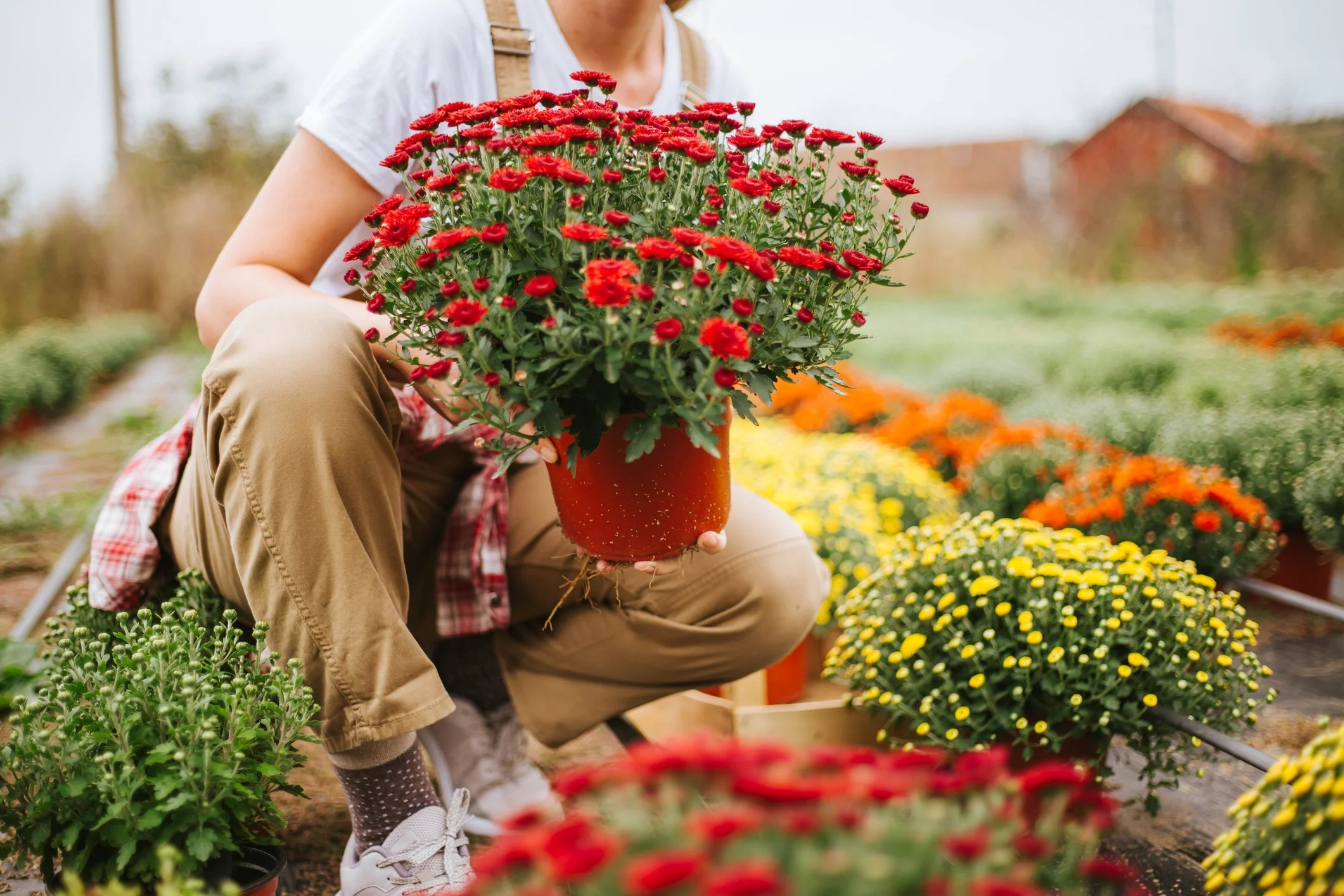
A fall container does not have to be orange and yellow. Choosing a color palette before you shop will make the finished arrangement feel intentional.
Consider combinations such as:
Orange, gold, and deep red
Burgundy, plum, and copper
White, green, and silver
Purple, rust, and chartreuse
Pink, cream, and soft green
Look at the container itself and the colors around your entrance, porch, or patio. A dark urn may look especially dramatic with white blooms and silver foliage, while a warm terra-cotta pot works beautifully with gold, burgundy, and orange.
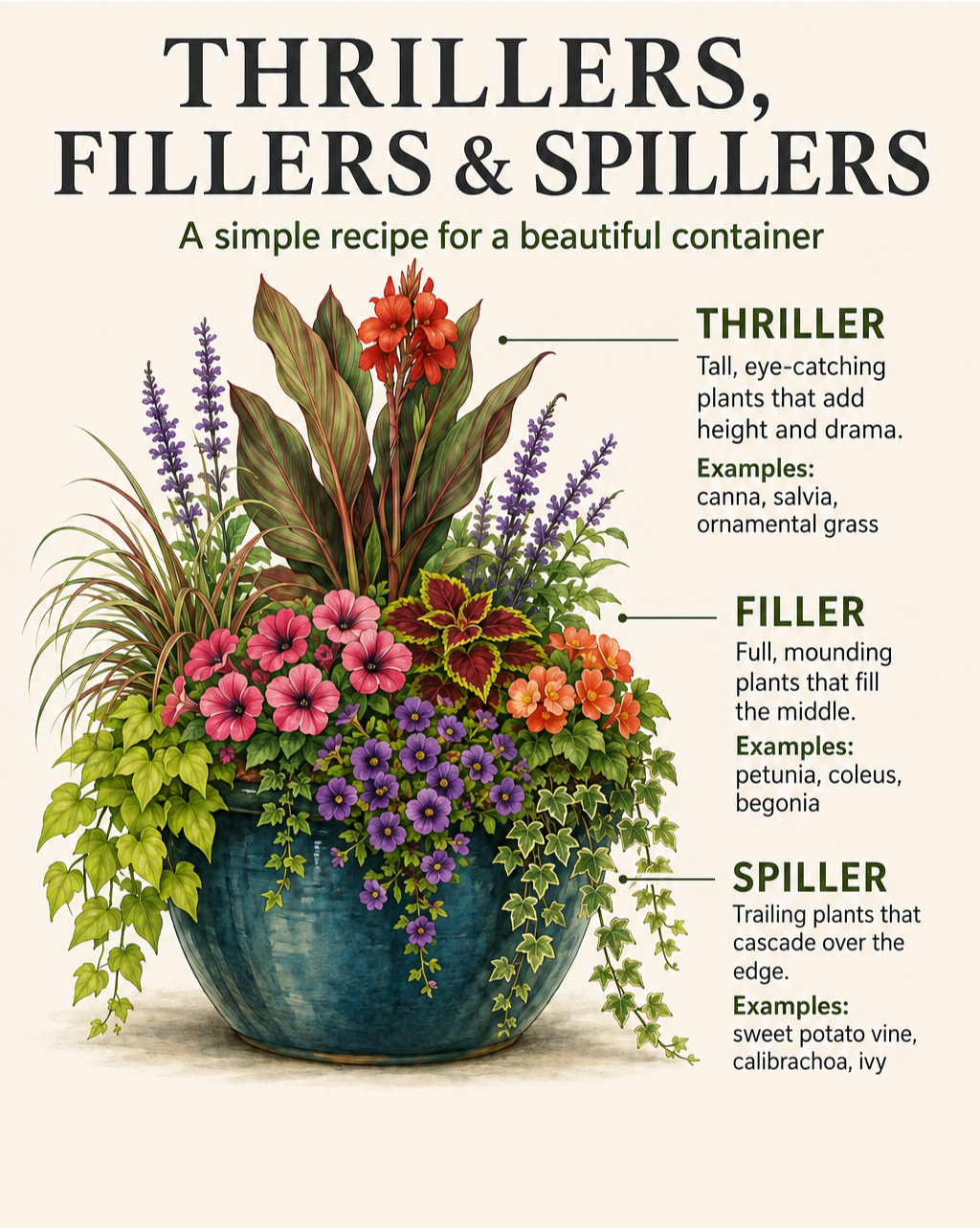
Use the Thriller, Filler, and Spiller Formula
The classic container formula still works beautifully for fall.
Thriller
The thriller provides height and creates a focal point. Good fall choices include:
Upright ornamental grasses
Tall crotons
Millet
Cordyline
Upright rosemary
Small evergreen shrubs
Branches or decorative stems
If your summer thriller is still healthy, keep it and build the new arrangement around it.
Filler
Fillers add body and color around the center of the arrangement. Fall favorites include:
Garden mums
Asters
Celosia
Ornamental peppers
Heuchera
Ornamental cabbage and kale
Dianthus
Snapdragons
Mums provide instant seasonal color, but they do not have to carry the whole design. Combining them with foliage plants creates a longer-lasting and more interesting container.
Spiller
Spillers soften the edge of the container and trail over the sides. Try:
Ivy
Creeping Jenny
Trailing sedum
Ajuga
Wire vine
Dichondra
Trailing rosemary
A summer spiller that has become too long may only need trimming and reshaping.
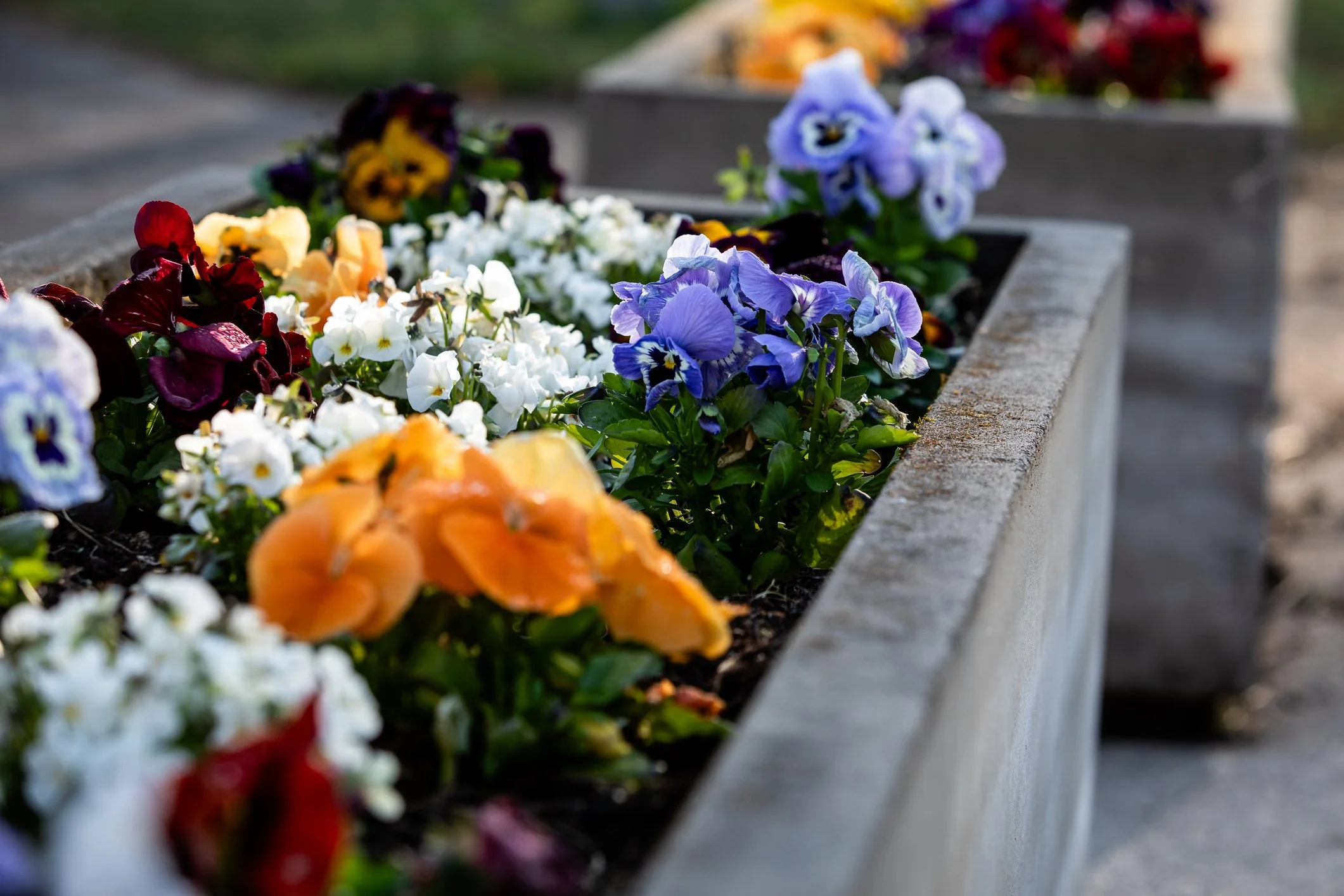
Don’t Rush the Pansies
Pansies and violas are fall favorites, but they prefer cool weather. Planting them while temperatures are still consistently high can leave them stretched, stressed, and vulnerable.
For an early-fall refresh, rely on heat-tolerant plants such as mums, asters, ornamental peppers, celosia, crotons, grasses, and healthy summer annuals.
Add pansies, violas, ornamental cabbage, and other cool-season plants once temperatures moderate. This two-stage approach keeps containers attractive during the transition from summer heat to true fall weather.
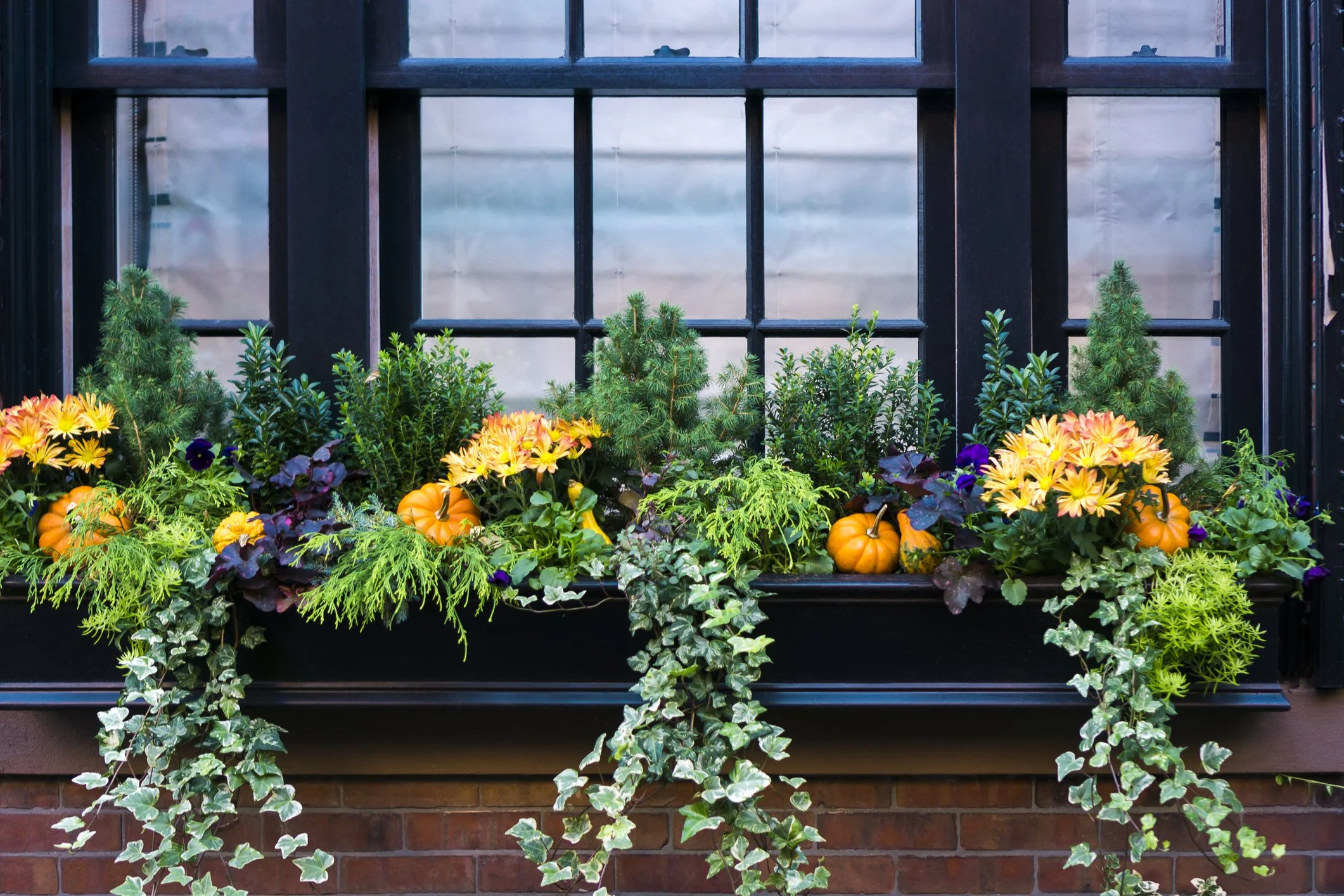
Add Seasonal Accents
Natural and decorative accents can make a refreshed container feel complete.
Try adding:
Small pumpkins or gourds
Birch or curly willow branches
Dried seed heads
Pinecones
A small grapevine sphere
A fall ribbon
A simple garden sign
Use accents sparingly. The plants should still be the main feature.
Pumpkins last longer when kept off damp soil. Rest them on the container’s edge, a small saucer, or another dry surface, and check them regularly for soft spots.
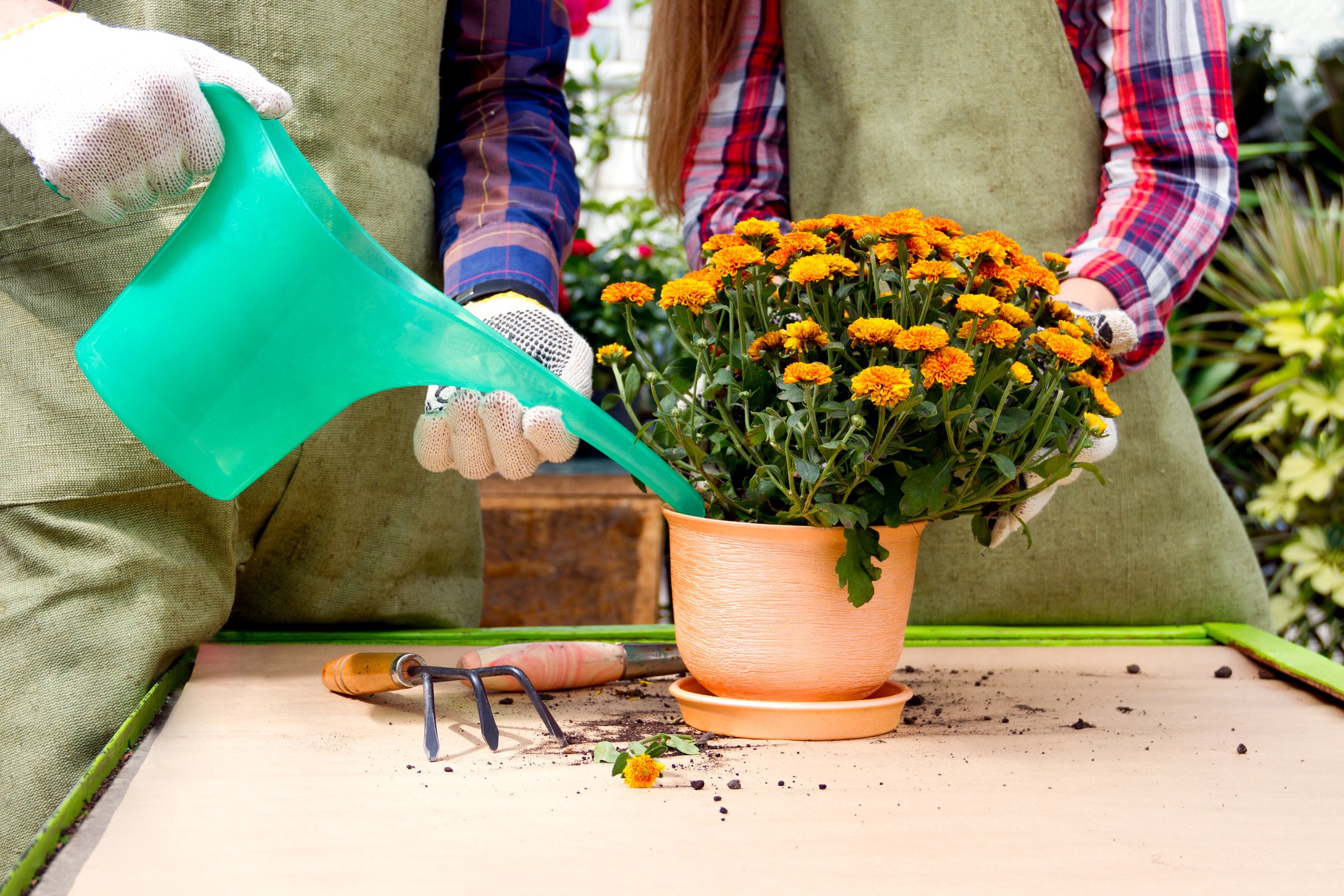
Watering Still Matters
Cooler evenings can make us forget that containers may still dry out quickly during sunny September days.
Check the soil with your finger rather than watering automatically. If the upper inch or two feels dry, water thoroughly until excess moisture drains from the bottom.
A newly refreshed container may need closer attention because new plants have small root systems. At the same time, declining warm-season plants often use less water than they did during peak summer, so avoid keeping the pot constantly wet.
Containers beneath porches and overhangs may receive little or no rainfall even during a storm.
Plan for the First Frost
Decide whether your refreshed container is meant to last a few beautiful weeks or continue into winter.
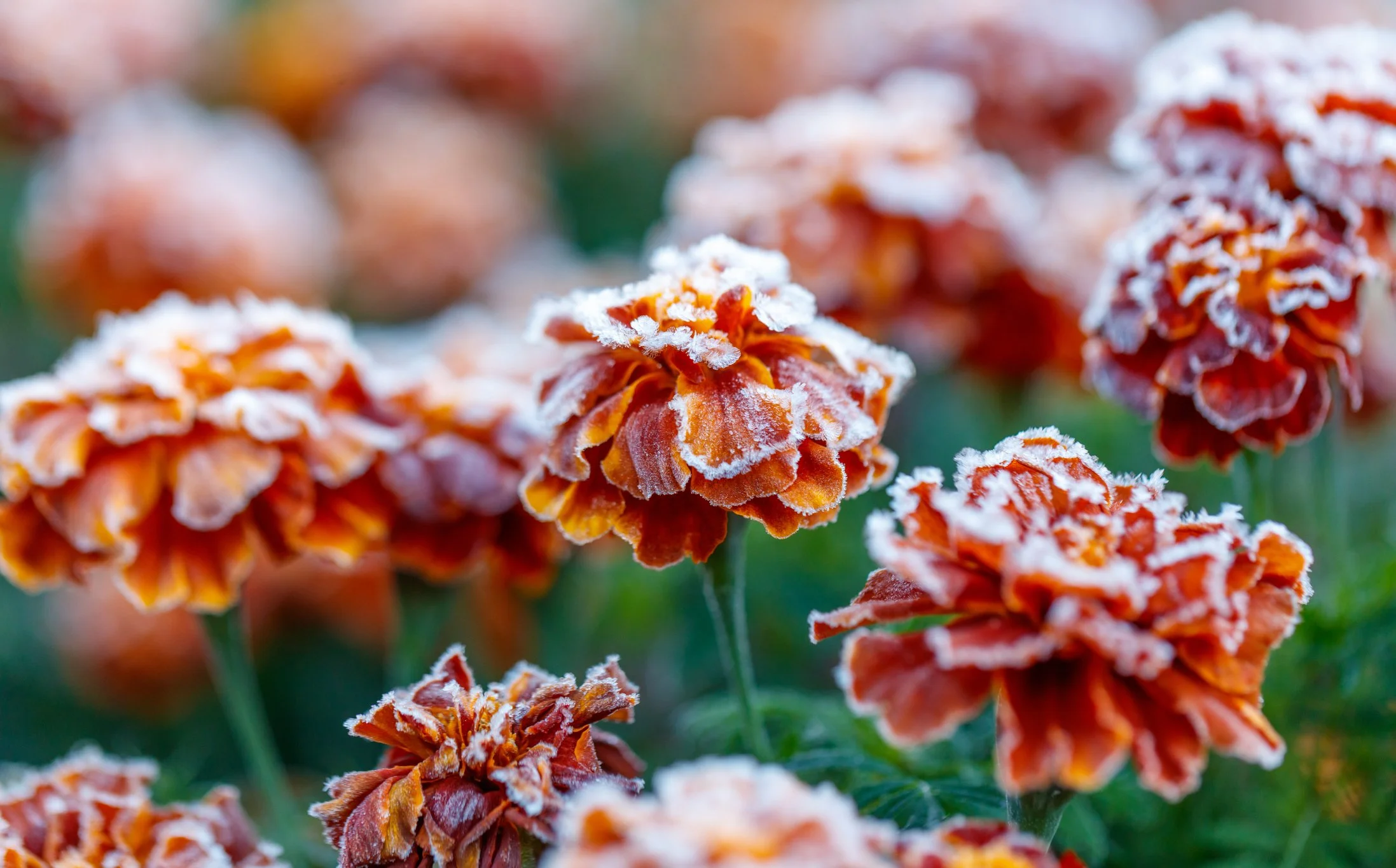
Tender plants such as coleus, crotons, caladiums, sweet potato vine, and ornamental peppers will be damaged by frost. When cold weather approaches, you can replace them with pansies, violas, ornamental cabbage, kale, evergreens, or hardy foliage plants.
Perennials used in containers—including heuchera, sedum, grasses, and small shrubs—may later be transplanted into the landscape if they are suited to your garden’s conditions.
This allows one container to evolve gradually from late summer into fall and then into the holiday season.
A Fresh Look Without Starting Over
Refreshing a summer container is less about following strict rules and more about working with what is still beautiful.
Keep healthy plants, remove anything that has reached the end of its season, restore the potting mix, and add a few fall favorites. Sometimes one mum and a small ornamental grass are enough to transform an entire arrangement.
Bring a photo of your existing container to us at Fernwood, along with its approximate size and information about how much sunlight it receives. Our team can help you choose plants that coordinate with what you already have and create a fall combination that feels fresh, full, and welcoming.