What’s Eating My Plants? A Guide to Late-Summer Garden Pests
By late summer, the garden can begin to look a little battle-worn. Leaves that were fresh and full in spring may now have holes, ragged edges, pale speckles, sticky residue, or entire sections missing.
The first reaction is often, “What can I spray?”
But before choosing a treatment, you need to identify what is causing the damage. Different pests leave different clues, and not every insect you find is responsible. Many insects are beneficial pollinators or natural predators that help keep true pests under control.
Here are some of the most common late-summer garden pests in Middle Tennessee—and how to recognize what they leave behind.
Start With the Damage
Inspect the entire plant before looking for a solution. Pay particular attention to:
The tops and undersides of leaves
New growth and flower buds
Leaf stems and the bases of plants
The soil and mulch surrounding the plant
Stems near the soil line
Fruit that is beginning to ripen
Ask yourself whether the leaves have holes or pale spots, whether the damage appeared suddenly, and whether you see insects, eggs, webbing, droppings, or a sticky substance.
Many pests hide during the heat of the day. If you cannot find the culprit, check the plant early in the morning or after sunset with a flashlight.
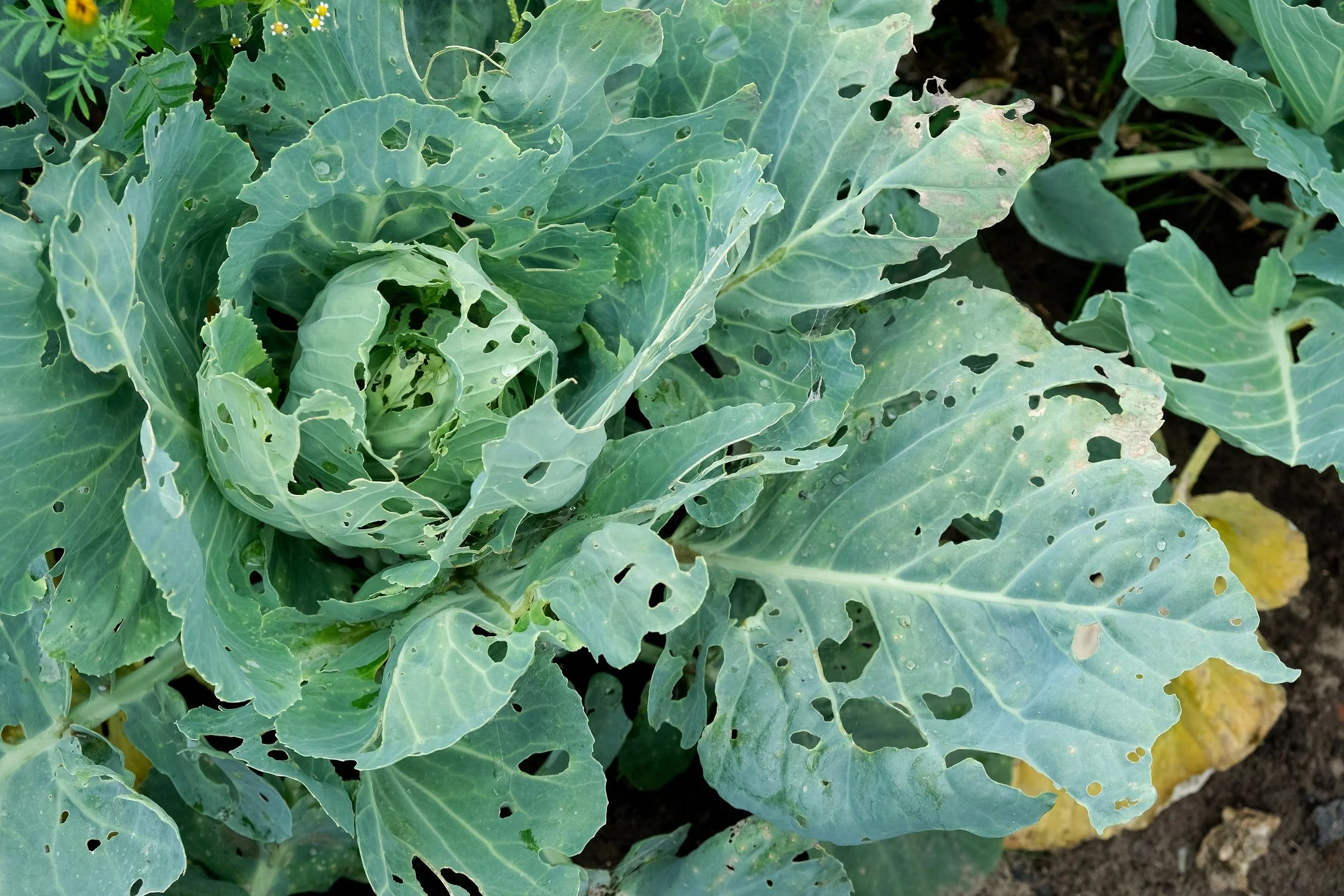
Large, Ragged Holes: Caterpillars
Caterpillars chew leaves and may leave large, irregular holes. Some consume entire leaves, leaving only stems or major veins behind. Small dark droppings—called frass—are another important clue.
Common late-summer caterpillars include:
Tomato and tobacco hornworms
Cabbage loopers
Imported cabbageworms
Armyworms
Fall webworms
Various ornamental plant caterpillars
Hornworms can quickly strip the foliage from tomatoes, peppers, and related plants. Despite their size, their green coloring makes them surprisingly difficult to see. Look beneath damaged leaves and follow the trail of dark droppings.
Handpicking is often the simplest control in a home garden. Drop unwanted caterpillars into a container of soapy water. However, if a hornworm is covered with small white, rice-like cocoons, leave it in place. Parasitic wasps are already controlling it, and those wasps may help protect the rest of your garden.
A product containing Bacillus thuringiensis var. kurstaki, commonly called Bt, may help control young caterpillars when used according to label directions. It must be eaten by the caterpillar, so good coverage of the affected foliage is important.
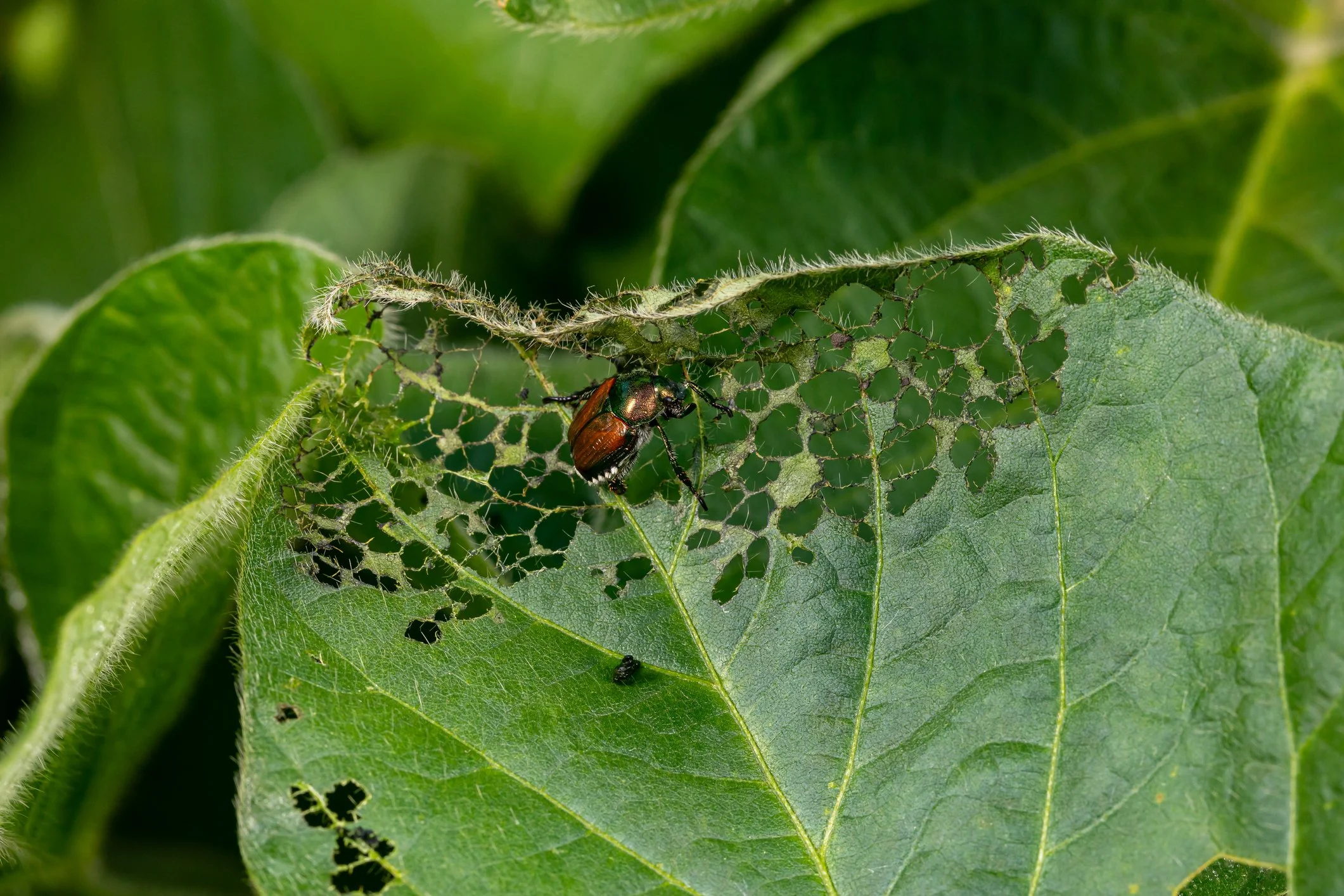
Skeletonized Leaves: Japanese Beetles
If the soft tissue between the leaf veins has been eaten, leaving behind a lace-like skeleton, Japanese beetles may be responsible.
Adult Japanese beetles have metallic green bodies and copper-colored wings. They commonly feed on roses, grapes, hibiscus, fruit trees, and many other plants. They frequently gather in groups, which can make the damage appear severe in a short period.
For smaller plantings, handpick beetles early in the morning when they are less active. Hold a container of soapy water beneath them and gently tap the branch.
Some leaf damage looks alarming but does not threaten the long-term health of an established plant. Treatments can also harm pollinators and beneficial insects, particularly when applied to flowers. Consider whether control is truly needed before spraying.
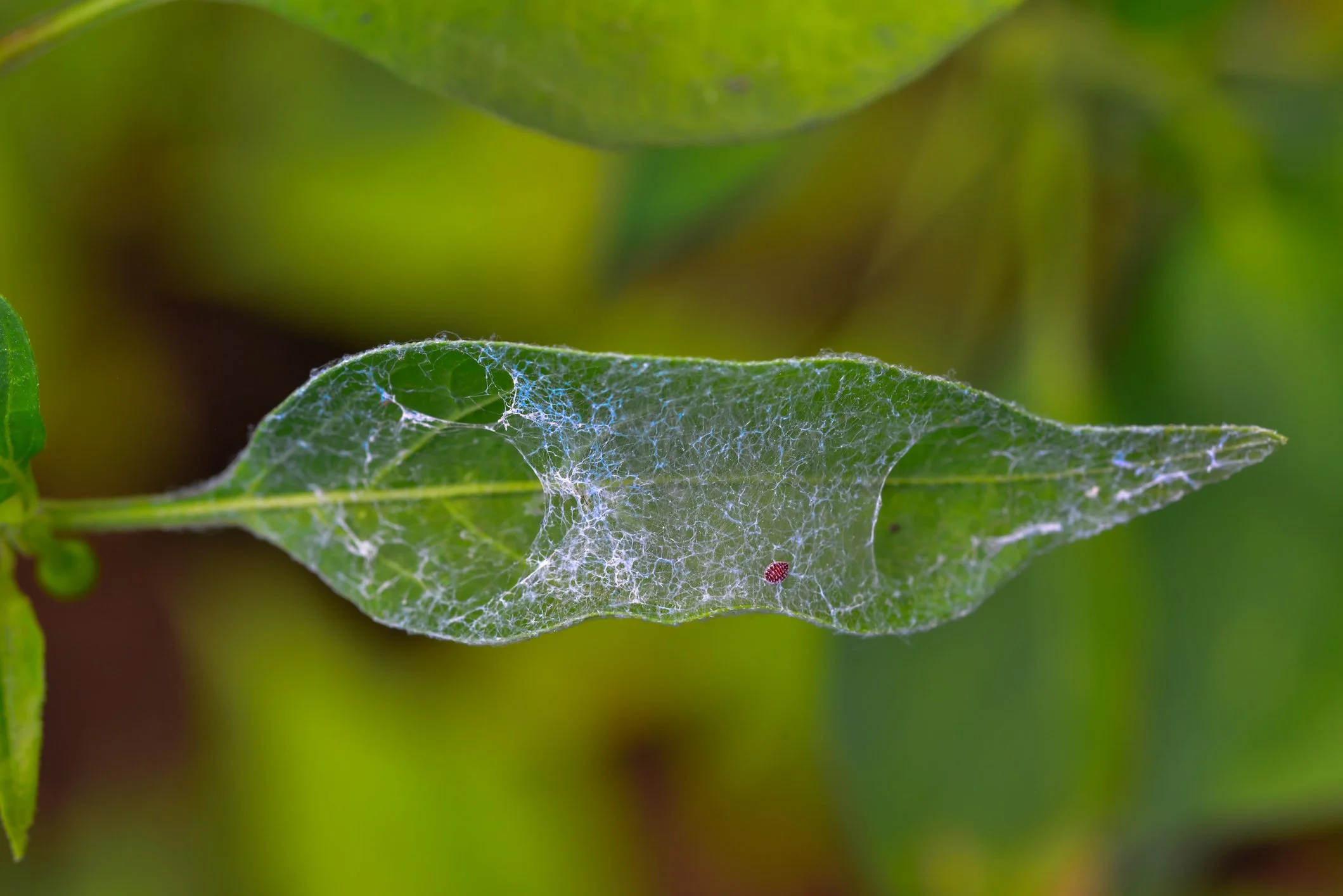
Fine Speckles & Webbing: Spider Mites
Spider mites thrive during hot, dry weather, making them a classic late-summer problem.
They are extremely small and may be difficult to see without magnification. Their feeding creates tiny pale or yellow speckles on leaves. As the population grows, leaves may appear bronzed, dry, or dusty, and fine webbing may develop between leaves and stems.
To check for spider mites, hold a sheet of white paper beneath a damaged branch and tap it firmly. If tiny moving specks fall onto the paper, mites may be present.
A strong stream of water directed at the undersides of leaves can dislodge mites and reduce their numbers. Repeat as needed. Avoid allowing drought stress to weaken susceptible plants, but do not keep the soil constantly saturated.
If an insecticidal soap or horticultural oil is needed, confirm that the product is labeled for the affected plant and pest. Apply during the cooler part of the day and test a small section first because heat-stressed plants can be sensitive.
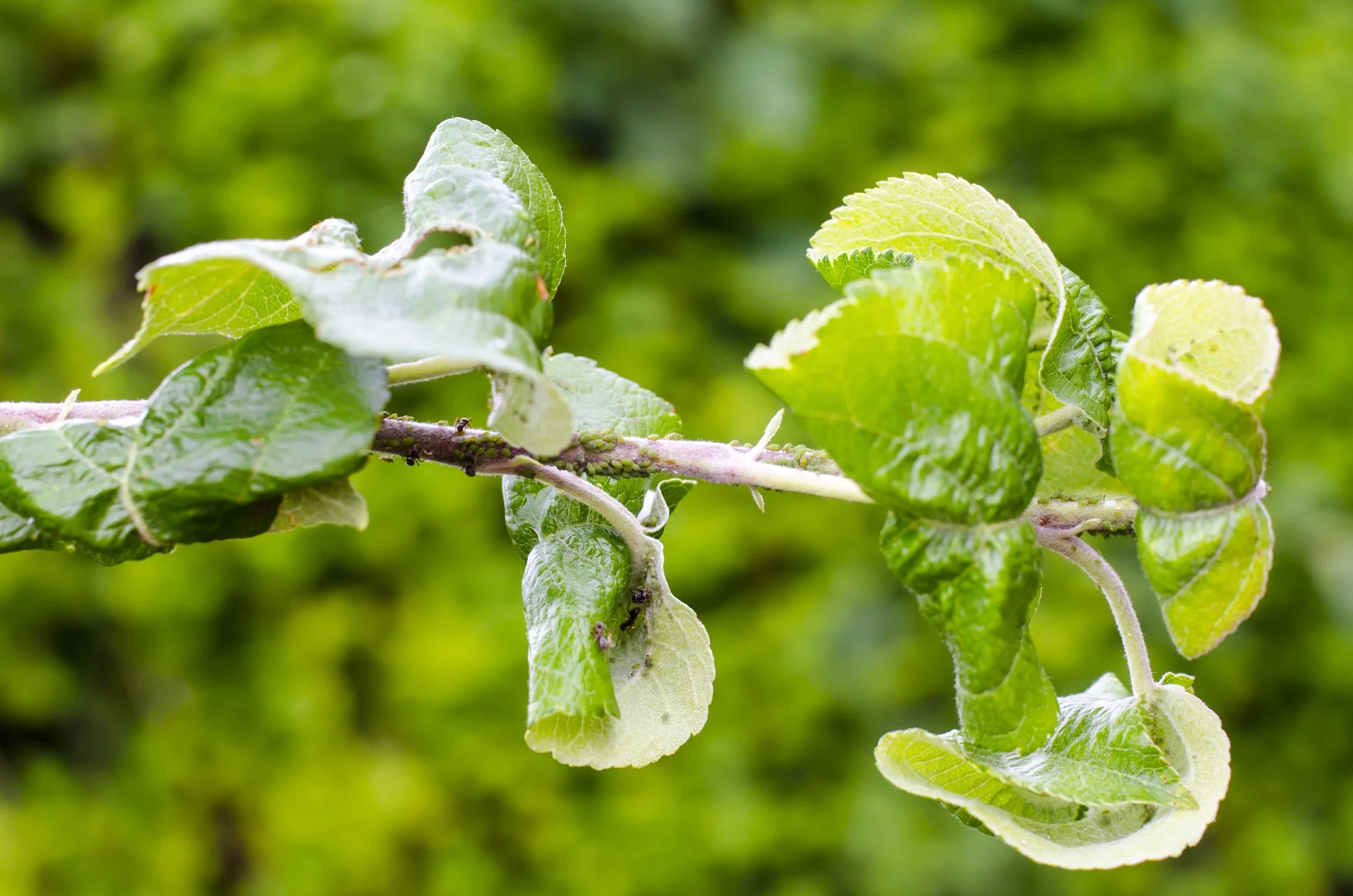
Curled Leaves & Sticky Residue: Aphids
Whatever it is, the way you tell your story online can make all the difference.
Aphids are small, soft-bodied insects that cluster on tender new growth, flower buds, and the undersides of leaves. They may be green, black, gray, yellow, or pink.
As aphids feed, leaves may curl, twist, or become distorted. Aphids also produce a sweet, sticky substance called honeydew. You may notice shiny leaves, ants traveling up and down the plant, or a dark coating called sooty mold growing on the honeydew.
Ants often protect aphids because they feed on the honeydew. Their activity can be a clue that an aphid colony is nearby.
A firm spray of water may be enough to remove a light infestation. Lady beetles, lacewings, hoverfly larvae, and other beneficial insects also feed on aphids. Before treating, look carefully to see whether these natural helpers are already at work.
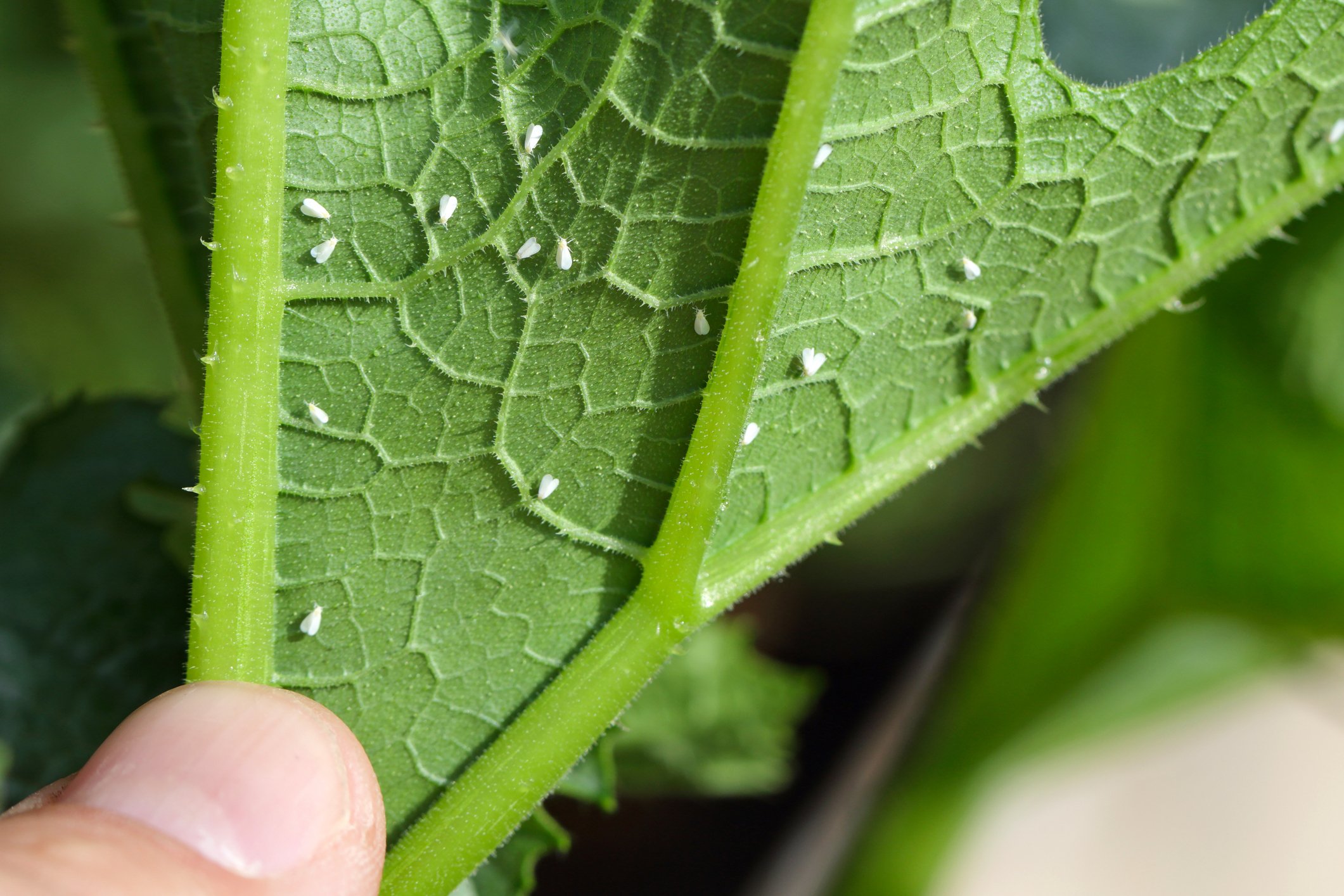
Yellowing & Tiny Flying Insects: Whiteflies
Whiteflies gather on the undersides of leaves and fly up in a small white cloud when the plant is disturbed.
Like aphids, they suck plant sap and produce honeydew. Heavy populations can cause yellowing, leaf drop, sticky foliage, and sooty mold. They are especially common on vegetables, annuals, tropical plants, and plants that have spent time in protected greenhouse conditions.
Remove heavily infested leaves when practical and spray the undersides of the remaining foliage with water. Insecticidal soap may be helpful, but it must contact the insects directly and usually requires repeated applications according to the label.
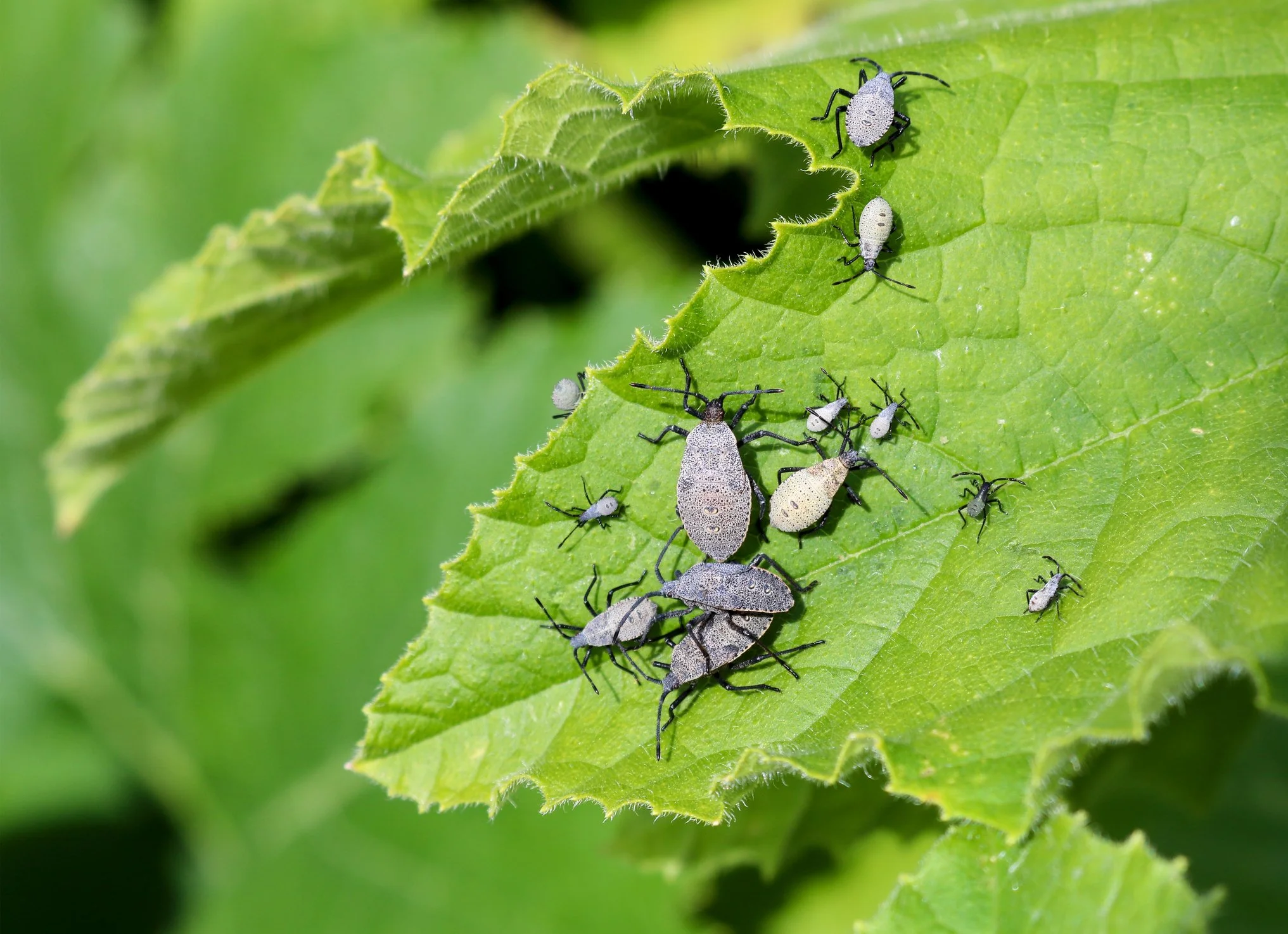
Wilting Squash Vines: Squash Bugs or Vine Borers
Squash plants can decline rapidly in late summer, but two different pests may be responsible.
Squash bugs are flattened, brownish-gray insects that feed on leaves and stems. Their bronze-colored eggs are commonly laid in clusters on the undersides of leaves. Feeding can cause yellow or brown patches, wilting, and eventually vine decline.
Remove egg clusters by hand or with a piece of tape. Check beneath boards, mulch, and plant debris where adult bugs may hide.
Squash vine borers cause sudden wilting by tunneling inside the stem. Look near the base of the vine for small holes and a moist, sawdust-like material. Once a borer is inside the stem, control becomes difficult. Removing badly affected vines and cleaning up plant debris at the end of the season can help reduce future problems.
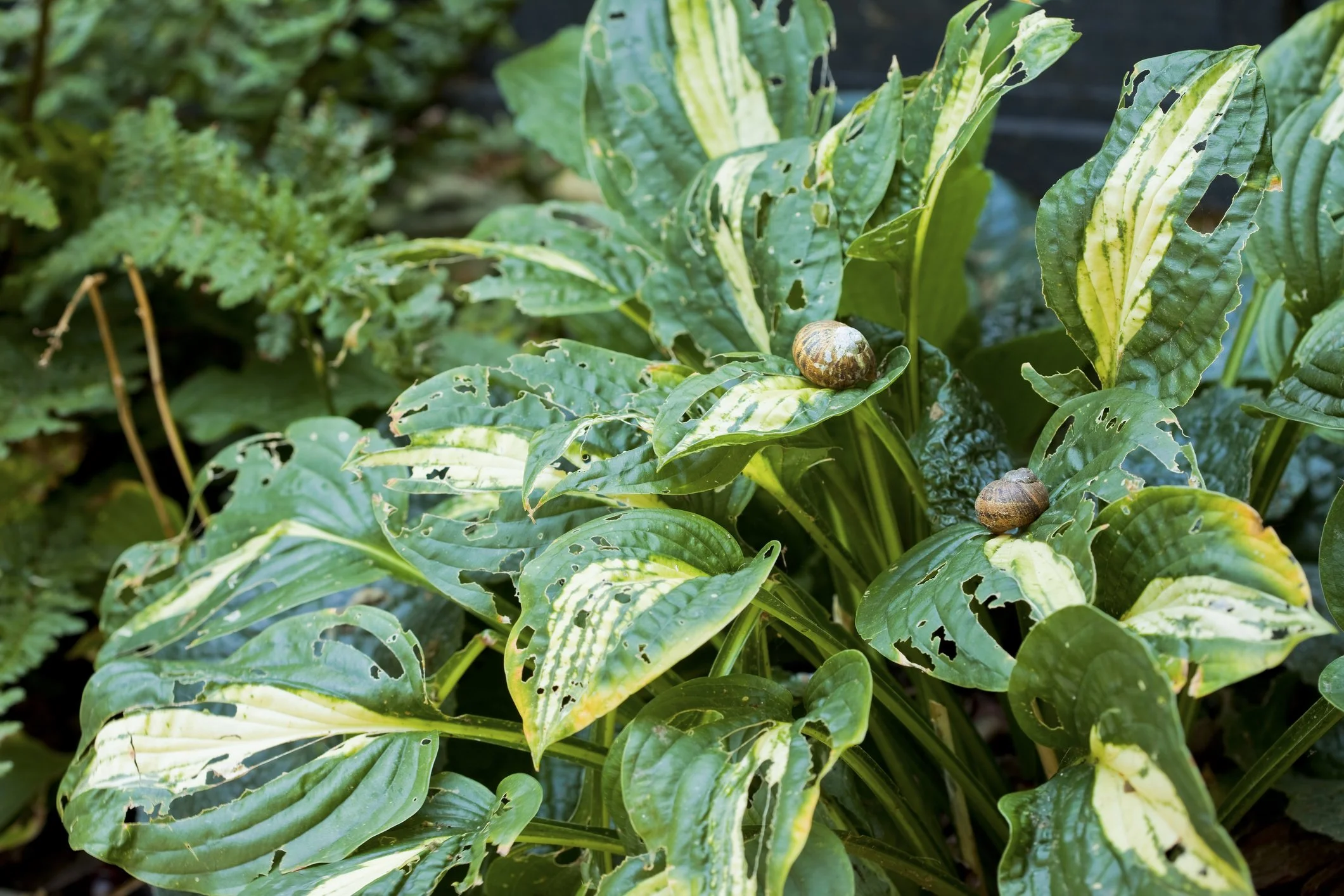
Slime Trails & Overnight Damage: Slugs and Snails
Slugs and snails chew irregular holes in tender leaves, flowers, seedlings, and ripening produce. Their damage occurs mainly at night or during cool, damp weather.
A shiny slime trail is the clearest sign. Check underneath pots, boards, stones, dense groundcover, and damp mulch during the day.
Reduce unnecessary hiding places and avoid keeping the garden surface constantly wet. Water early in the morning so the soil surface is less damp overnight. Handpicking after dark can be surprisingly effective in a small garden.
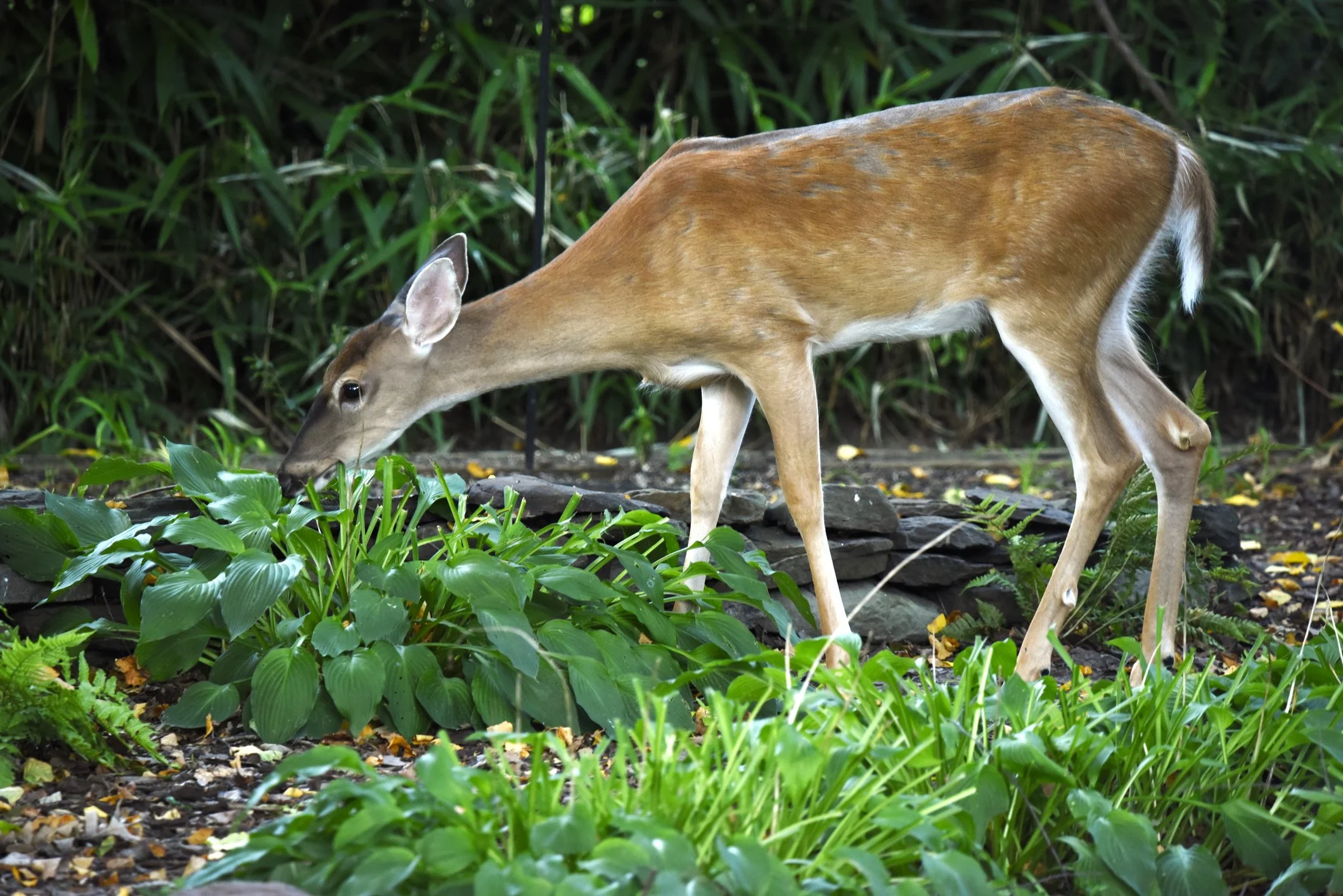
Clean-Cut or Torn Plants: Deer and Rabbits
Not all garden damage is caused by insects.
Rabbits usually feed close to the ground and leave clean, angled cuts on stems. Deer lack upper front teeth, so their feeding tends to leave torn or ragged ends. Deer may also browse much higher on shrubs and perennials.
Fencing or physical barriers provide the most dependable protection. Repellents may help, but they often need to be reapplied after rain and rotated so animals do not become accustomed to them.

When Should You Treat?
A few holes do not necessarily mean a plant is in danger. A healthy, established plant can tolerate a surprising amount of cosmetic damage.
Treatment may be justified when:
Seedlings or young plants are being destroyed
Damage is spreading rapidly
A food crop is losing a significant amount of foliage
The pest could permanently weaken the plant
The infestation is too large for hand removal
A harmful pest has been positively identified
Begin with the simplest targeted solution: handpick the pest, remove affected leaves, use a stream of water, or protect the plant with an appropriate barrier.
If a pesticide becomes necessary, identify both the plant and the pest before selecting a product. Always read and follow the complete label. Avoid treating plants in bloom whenever possible, and never apply a product during the heat of the day unless the label specifically allows it. Even products marketed as natural or organic can harm pollinators and beneficial insects if used incorrectly.
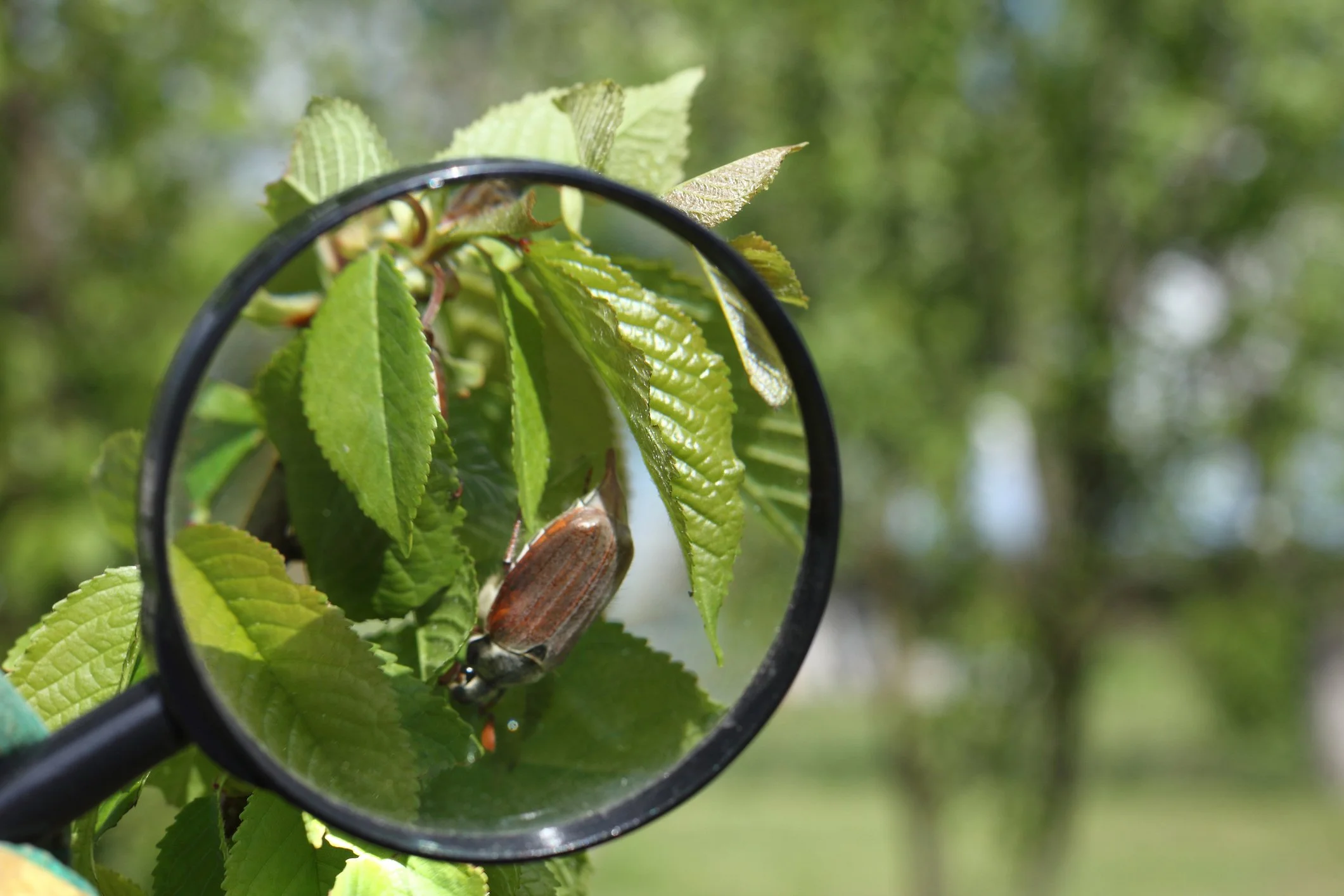
Bring Us the Evidence
Correct identification is the most important part of pest control. Treating the wrong problem wastes time, may damage the plant, and can eliminate the beneficial insects that were helping your garden.
Take several clear photos showing the entire plant, the damaged leaves, and the undersides of the leaves. If possible, safely collect the suspected pest in a sealed container.
Bring your photos or sample to us at Fernwood. Tell us what kind of plant is affected, how long the damage has been occurring, and what treatments (if any) have already been used. Our team can help you identify the likely culprit and choose a practical, responsible solution for your garden.