How to Bring Houseplants Indoors Without Bringing the Bugs
A summer outdoors can do wonders for houseplants. Brighter light, warm temperatures, rain, and natural humidity often encourage lush new growth.
Unfortunately, outdoor conditions can also introduce aphids, spider mites, scale, ants, slugs, fungus gnats, and other unwanted guests. If plants are carried directly from the patio to their winter location, those pests can spread quickly to the rest of your indoor collection.
The best way to prevent problems is to begin preparing plants before cold weather forces you to bring everything inside at once.
Start Before the Nights Become Cold
Do not wait for the first frost warning.
Most tropical houseplants should begin moving indoors when nighttime temperatures consistently fall into the 50s. Some cold-sensitive plants may become stressed at even warmer temperatures.
Begin the process two to three weeks before you expect to bring the plants inside. This gives you time to inspect, clean, treat, and monitor them without rushing.
It also allows the plants to adjust gradually to lower indoor light levels.
Decide Which Plants Are Worth Saving
Before beginning, take an honest look at every plant.
Ask yourself:
Is the plant healthy?
Does it have sentimental or financial value?
Do I have enough indoor light for it?
Is there room for it at its mature size?
Is it heavily infested with pests?
Would taking a cutting be easier than keeping the entire plant?
A large, declining plant with a severe pest problem may not be worth risking the health of your indoor collection.
For vigorous plants such as coleus, begonias, geraniums, and some tropicals, taking clean cuttings can be easier than bringing in the original plant. Rooted cuttings require less space and may be easier to inspect and treat.
Create an Inspection Area
Move the plants you plan to keep away from your other outdoor containers. A covered porch, shaded driveway, patio table, or workbench can serve as a temporary inspection area.
Work in good light and examine one plant at a time. A magnifying glass can help because several common houseplant pests are extremely small.
Inspect:
The tops and undersides of leaves
New leaves and flower buds
The places where leaves join stems
Stems and branches
The soil surface
Drainage holes
Pot rims and crevices
The bottoms of pots and saucers
Do not assume that every insect you see is a plant pest. Outdoor plants naturally host many harmless or beneficial creatures. The goal is to identify evidence of damaging pests—not to spray every plant automatically.
Know the Signs of Common Pests
Different pests leave different clues.
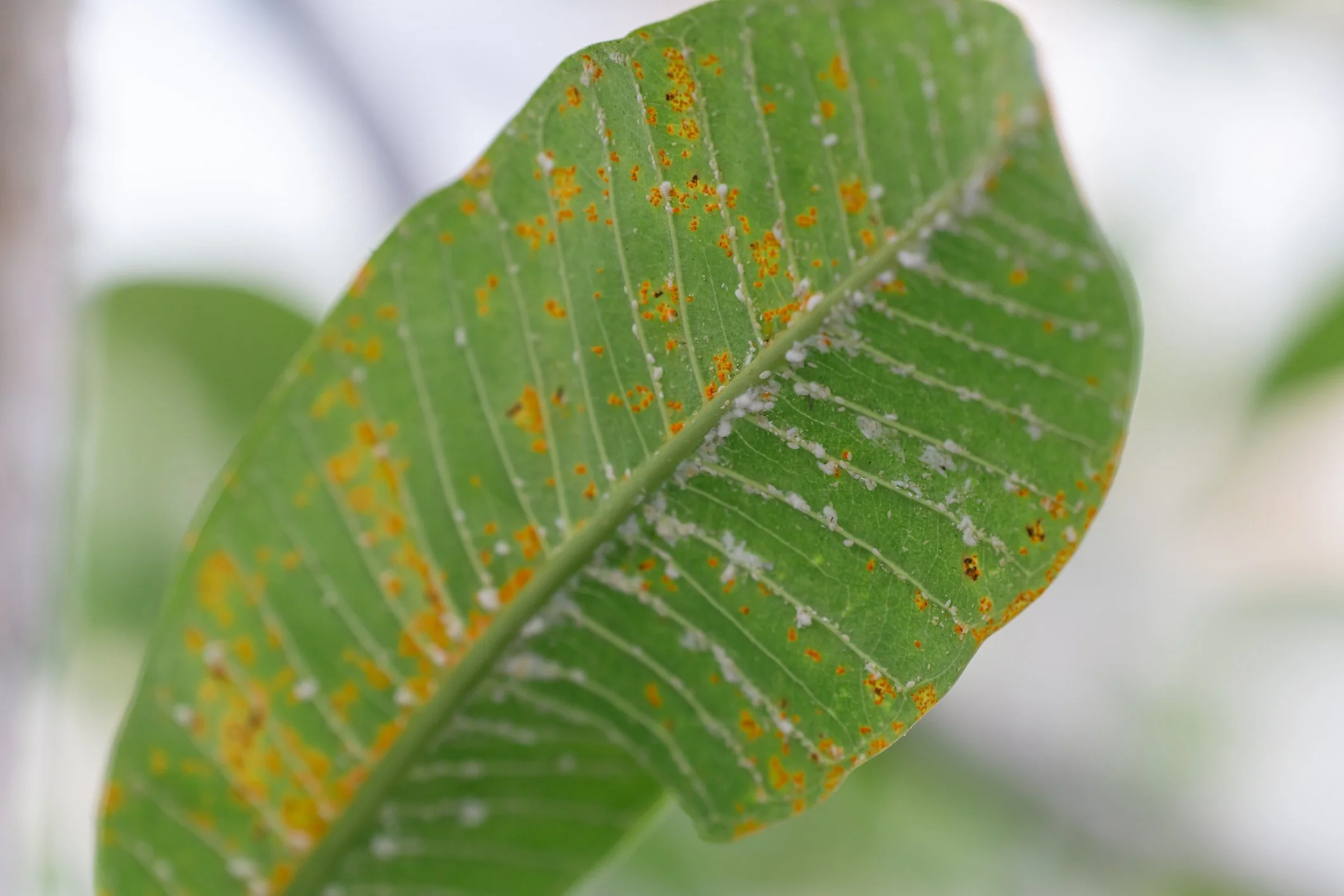
Aphids
Aphids are small, soft-bodied insects that gather on tender new growth and flower buds. They may be green, black, gray, yellow, or pink.
Look for curled leaves, distorted growth, white shed skins, or a shiny, sticky residue called honeydew.
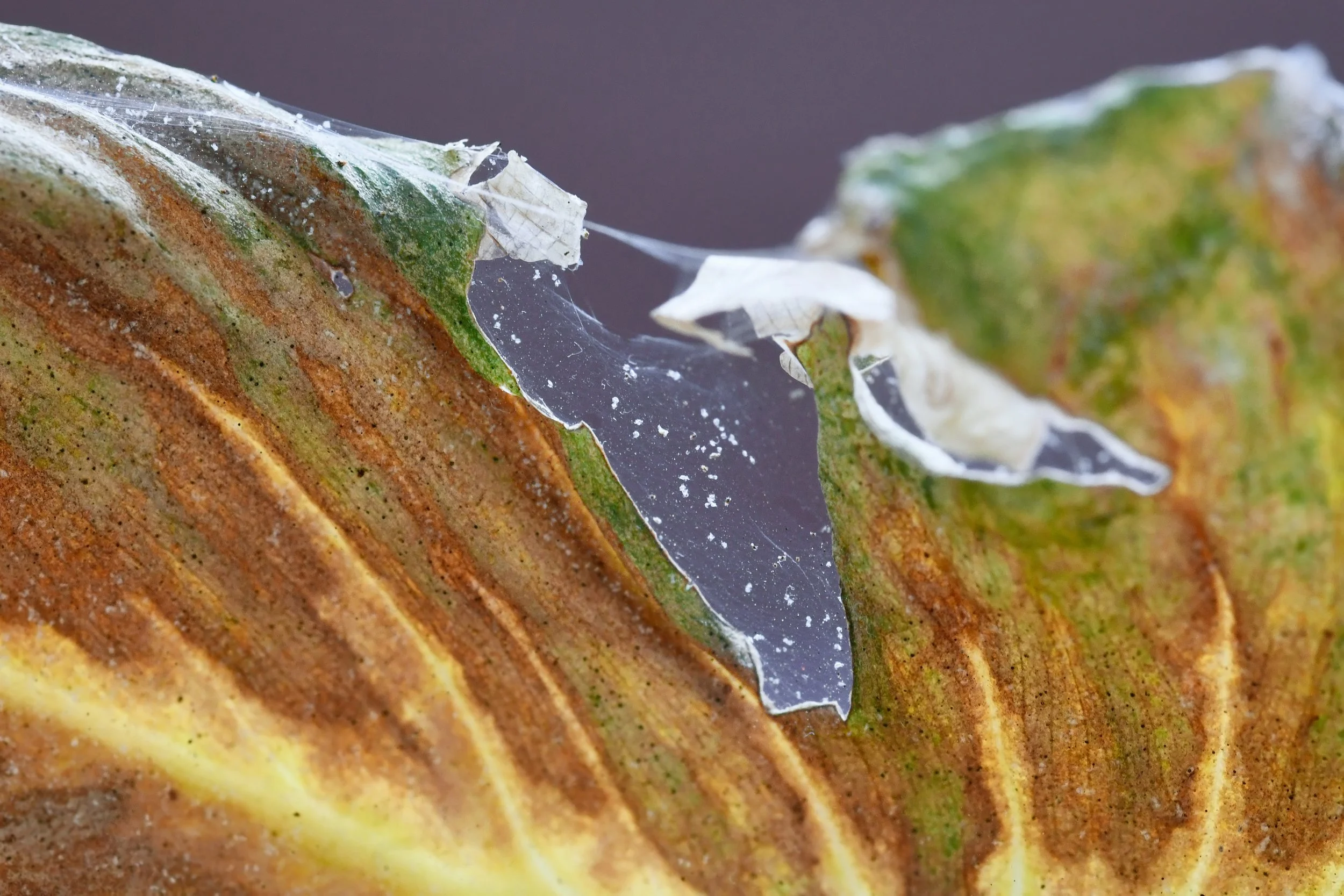
Spider Mites
Spider mites are almost too small to see without magnification. They create pale speckles or stippling on leaves and may produce fine webbing between stems and foliage.
Hold a piece of white paper beneath a leaf and tap it firmly. Tiny moving specks on the paper may be mites.
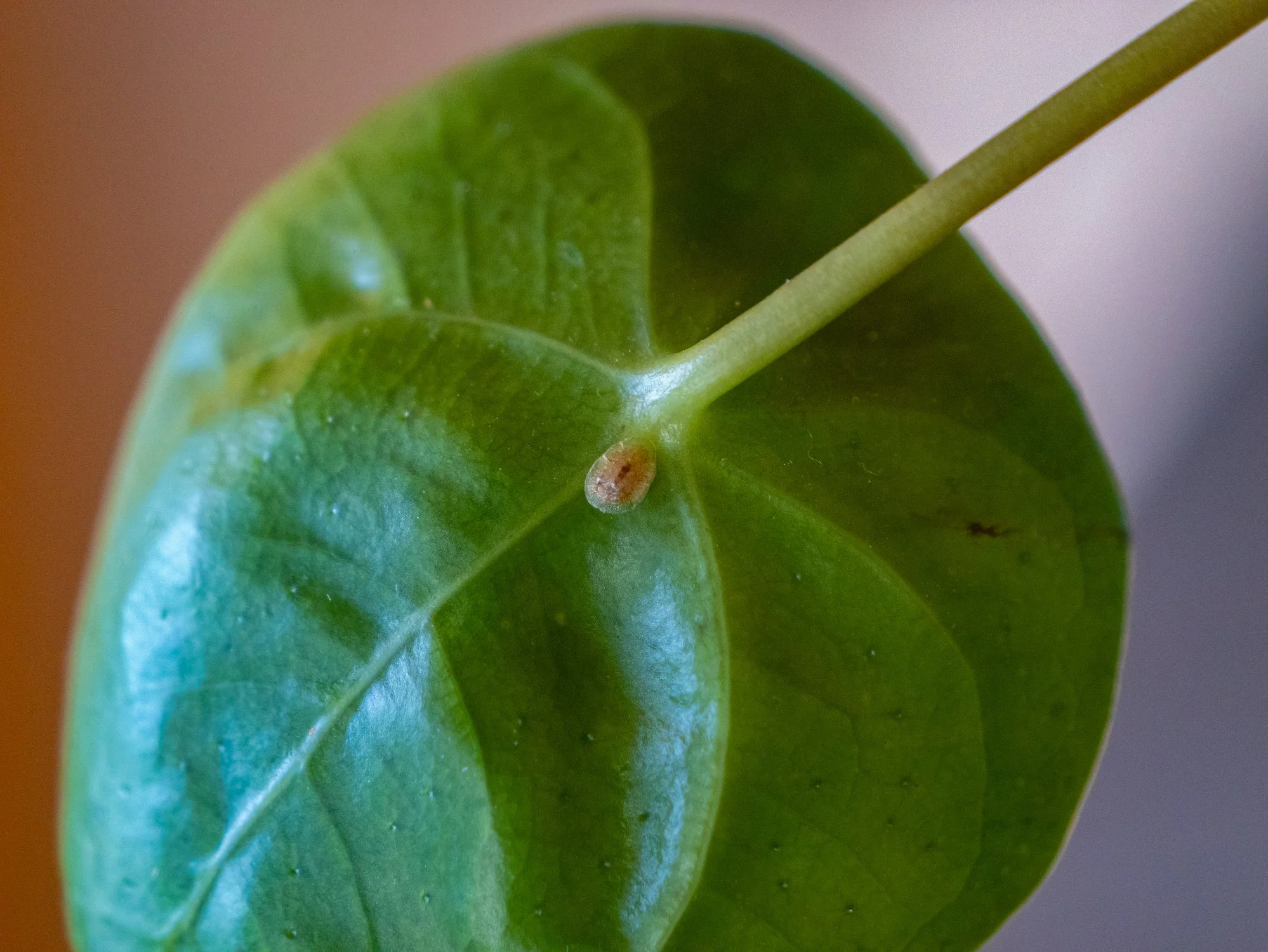
Scale
Scale insects look like small brown, tan, gray, or white bumps attached to stems or leaves. Because they remain still for much of their lives, they are often mistaken for part of the plant.
Some types produce sticky honeydew. Heavy infestations can cause yellowing, leaf drop, and weak growth.
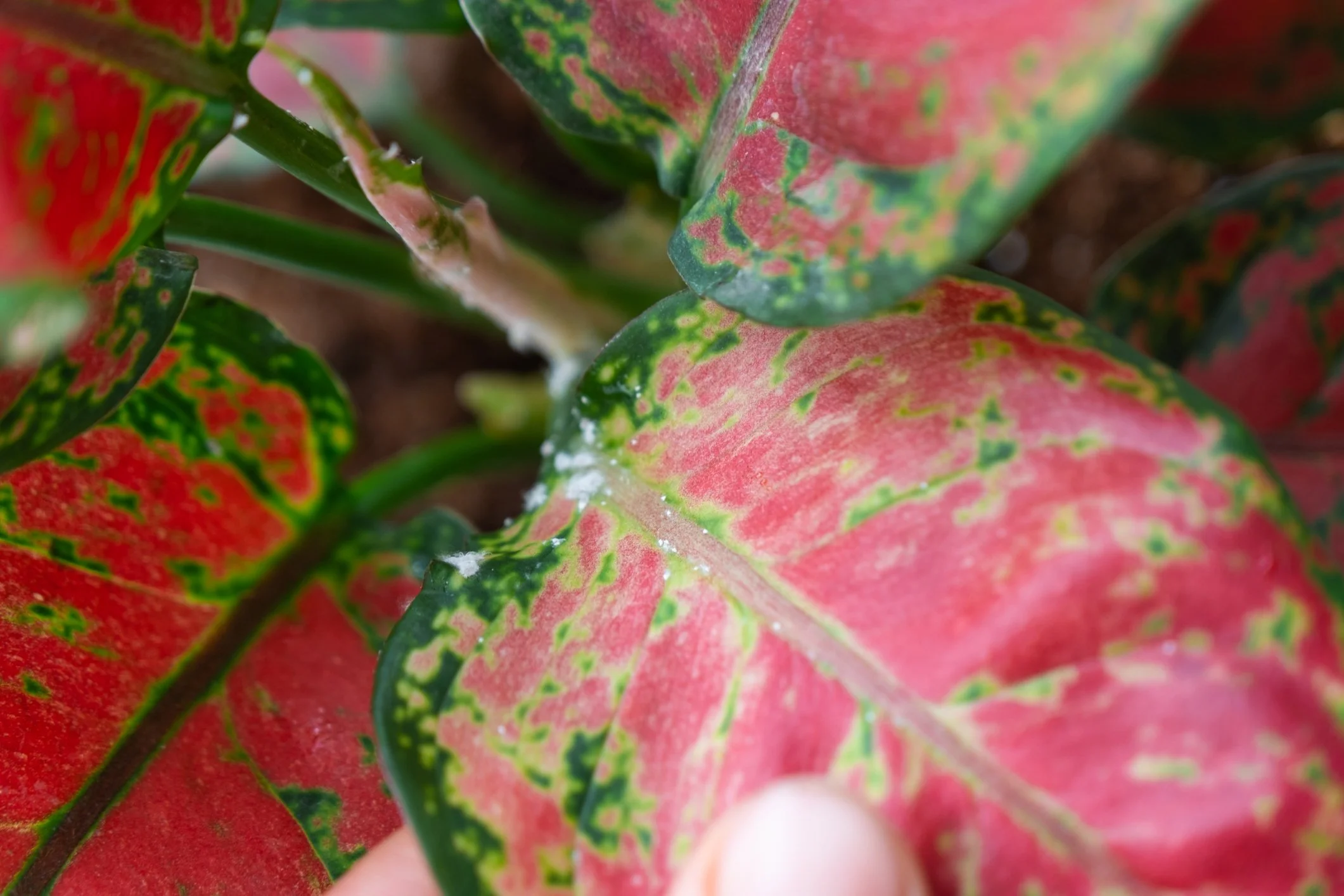
Mealybugs
Mealybugs look like tiny pieces of white cotton. Check leaf joints, stem crevices, and the undersides of leaves.
They can hide in very small spaces and may spread from plant to plant once indoors.
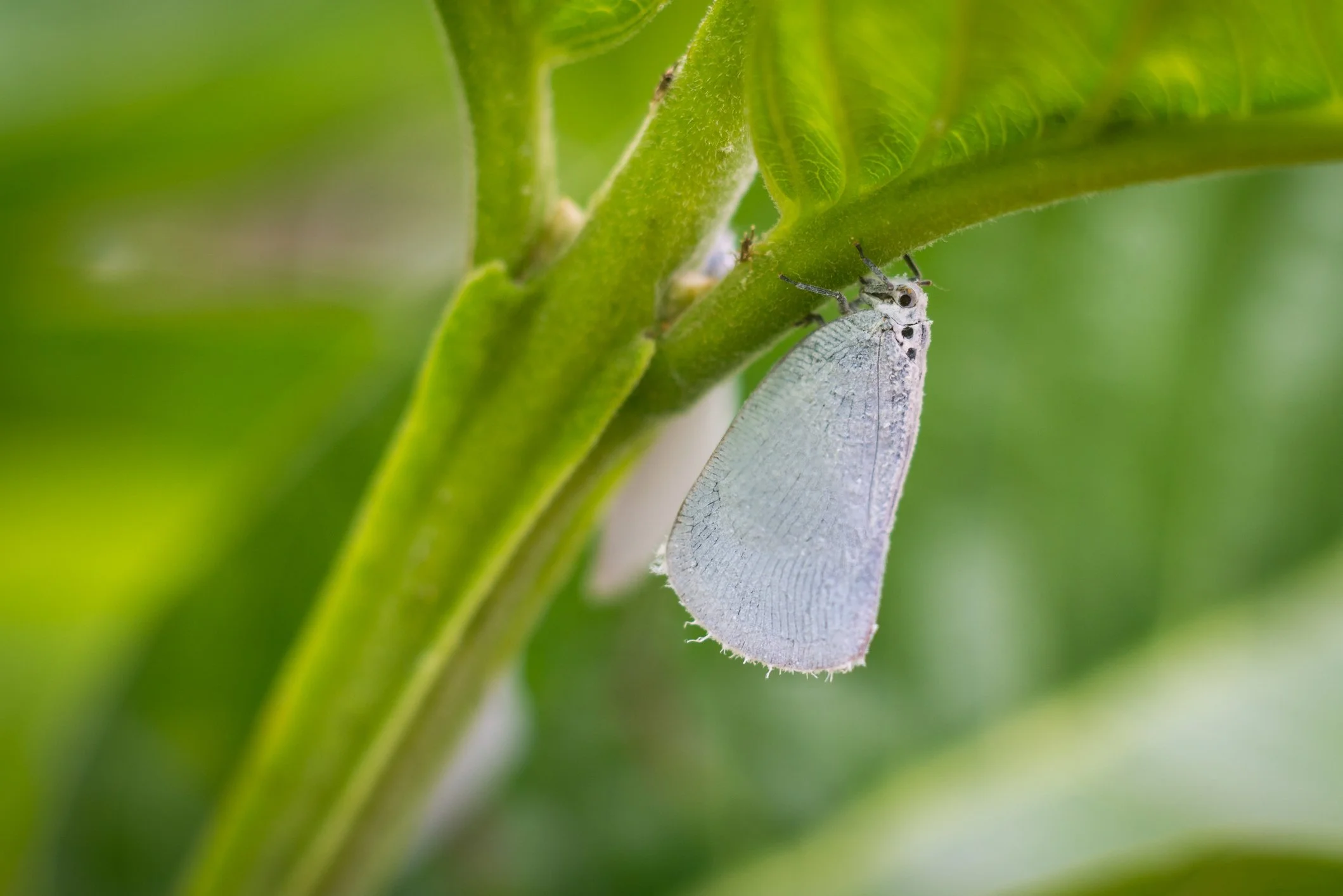
Whiteflies
Whiteflies are tiny white insects that gather beneath leaves. When the plant is moved, adults may rise in a small cloud before settling again.
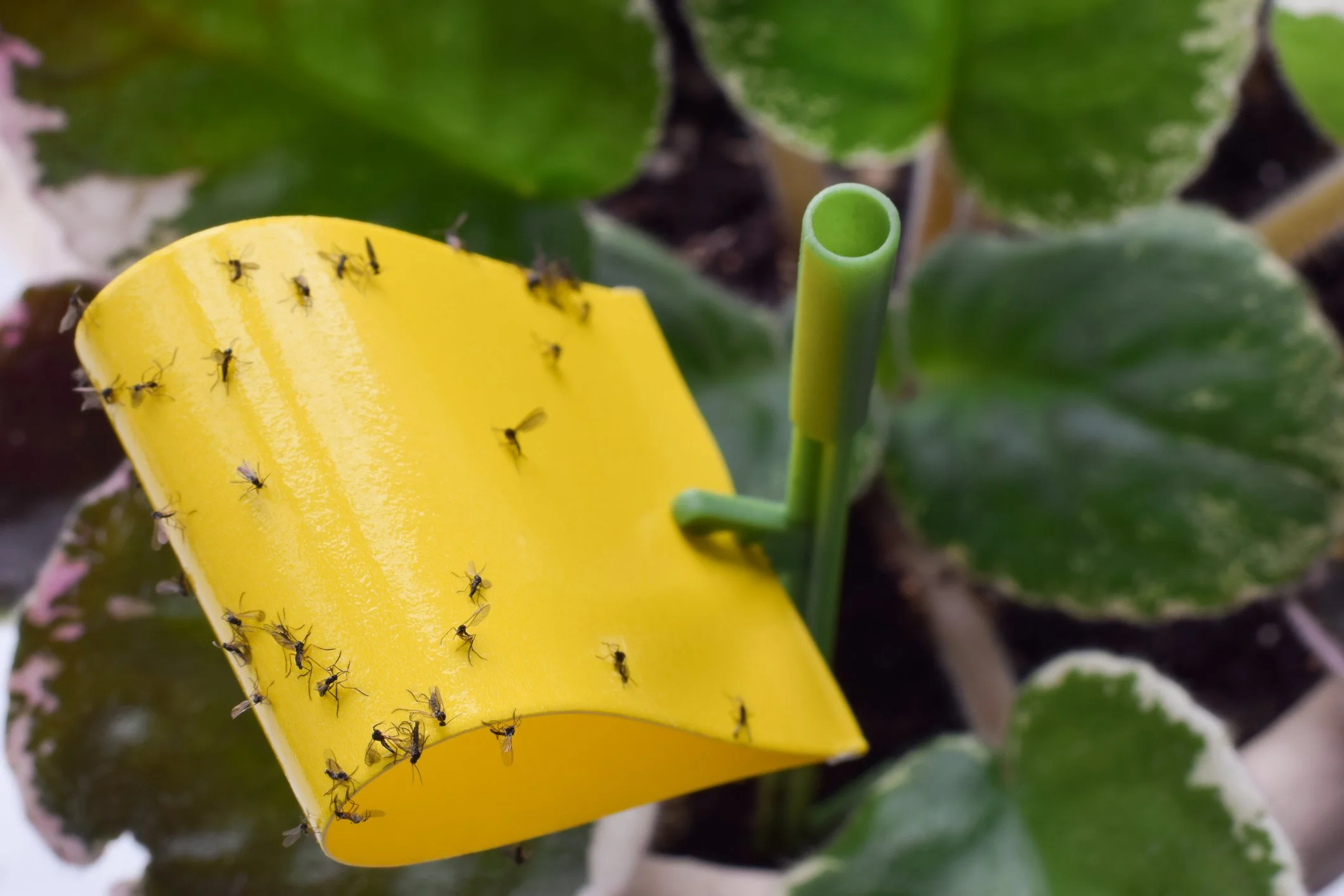
Fungus Gnats
Fungus gnats are small, dark flies commonly associated with consistently damp potting mix. The adults are mostly a nuisance, while their larvae live in moist organic matter in the soil.
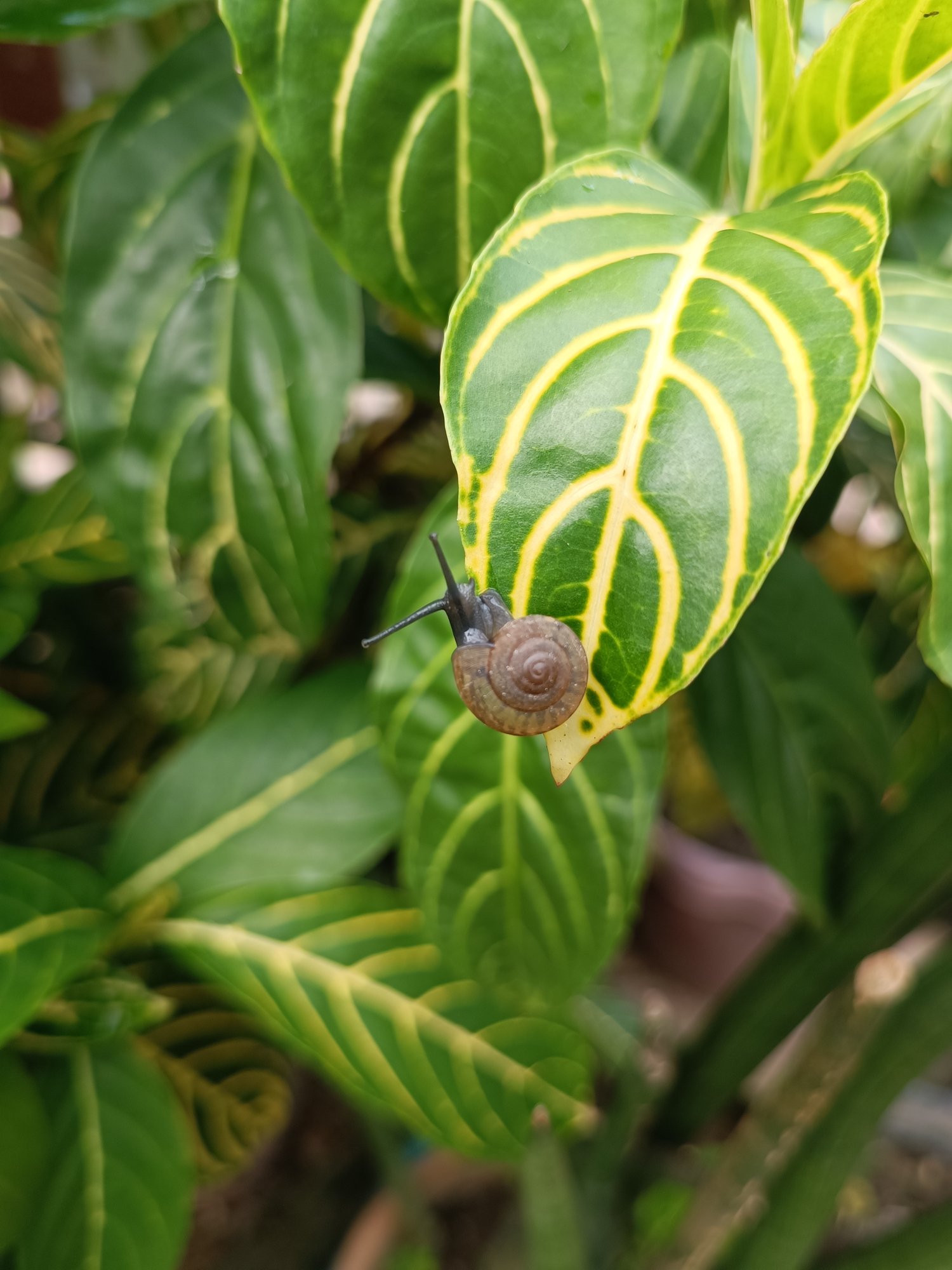
Slugs, Snails, Ants, and Other Hitchhikers
Check underneath the pot and around drainage holes for slugs, snails, pill bugs, millipedes, spiders, ants, and egg clusters.
Many of these creatures do not feed on the houseplant, but you probably do not want them moving into your home.
Wash the Plant Thoroughly
A strong stream of water can remove dust and many insects.
Use a garden hose to rinse the tops and undersides of the leaves. Pay special attention to new growth, leaf joints, and dense areas where pests can hide.
Make sure the water pressure is firm enough to dislodge insects but not strong enough to damage delicate foliage.
For plants with large leaves, wipe each leaf with a clean, damp cloth. Change or rinse the cloth frequently so you do not transfer pests from one part of the plant to another.
Avoid using milk, mayonnaise, or leaf-shine products. These do not control pests and may leave a residue that attracts dust or interferes with the leaf surface.
Allow the plant to dry in a shaded area. Wet foliage placed immediately in strong sunlight may scorch.
Clean the Pot and Saucer
Bugs do not live only on the plant.
Scrub the outside of the pot, paying close attention to the rim, base, drainage holes, and decorative crevices. Wash the saucer separately and remove accumulated soil, algae, dead leaves, and debris.
If roots have grown through the drainage holes, determine whether the plant needs repotting. Do not simply tear away a large mass of healthy roots unless necessary.
Decorative cachepots can conceal standing water and pests, so inspect and clean those as well.
Should You Repot Before Bringing Plants Indoors?
Not every plant needs fresh soil.
Unnecessary repotting adds stress at a time when the plant is already adjusting to a major environmental change. If the potting mix drains well, smells normal, and shows no signs of soil pests, leave it alone.
Repot when:
The plant is severely rootbound
The potting mix remains wet too long
The soil smells sour
Ants or other pests are nesting in the pot
The roots show signs of rot
The container has poor drainage
Use a clean container and fresh potting mix intended for indoor plants. Do not use garden soil, and avoid using potting mix from an open bag that has been stored outdoors. University of Minnesota Extension recommends fresh, sterile potting mix because garden soil and outdoor-stored mix may introduce pests indoors. University of Minnesota Extension
Treat the Pest You Actually Have
If you find a pest, identify it before choosing a treatment. A product that controls aphids may not work on scale, mites, or fungus gnat larvae.
Begin with the least disruptive option:
Spray aphids and mites from the plant with water.
Wipe scale from leaves and stems.
Remove mealybugs individually with a cotton swab when the infestation is small.
Prune heavily infested leaves or stems.
Handpick slugs, caterpillars, and other large pests.
Allow the upper layer of potting mix to dry appropriately to discourage fungus gnats.
Insecticidal soap or horticultural oil may be appropriate for certain pests and plants. Use a commercial product labeled for the specific plant, pest, and application location.
Do not substitute dish detergent for insecticidal soap. Household soaps and degreasers can damage leaves because their ingredients and concentrations are not formulated for plants.
Whenever using a pest-control product:
Read the entire label.
Confirm that the plant and pest are listed.
Follow all mixing and safety directions.
Test a small portion of the plant first.
Avoid treating a drought-stressed plant.
Apply outdoors when the label and weather conditions allow.
Keep people and pets away as directed.
Repeat treatment only at the labeled interval.
One treatment may not eliminate eggs or immature pests. Continue inspecting the plant and repeat only as the product label instructs.
Quarantine Plants Indoors
Even a plant that looks clean may be carrying eggs or tiny pests that are difficult to see.
When the plant comes indoors, keep it separated from your established houseplants for at least one to two weeks. A longer quarantine may be wise if you found and treated an active infestation.
Choose an area with suitable light and temperature. Avoid placing quarantined plants in a dark garage for weeks unless they are plants that can tolerate those conditions.
Check them every few days. Yellow or blue sticky traps can help detect flying pests such as fungus gnats, whiteflies, winged aphids, and thrips, but traps do not control pests living on the foliage or in the soil.
Inspect the plant again before moving it into your main collection.
Help Plants Adjust to Indoor Conditions
Moving inside is a significant change even for a pest-free plant.
Indoor light is much weaker than outdoor light, including outdoor shade. If possible, move plants to progressively shadier outdoor locations for a week or two before bringing them inside.
Once indoors:
Place each plant in the brightest appropriate location.
Keep foliage away from cold window glass.
Avoid heating vents and sudden drafts.
Reduce watering as growth slows.
Empty water from saucers and cachepots.
Wait before fertilizing heavily.
Expect some leaf drop during adjustment.
Overwatering is especially common after plants return indoors. Lower light and cooler temperatures mean many plants use water more slowly. Check the potting mix rather than watering on a fixed schedule.
Consistently wet soil can lead to root problems and create ideal conditions for fungus gnats.
Continue Checking All Winter
Pest prevention does not end once quarantine is over.
Inspect plants whenever you water. Look beneath leaves, feel for sticky residue, and watch for distorted new growth, speckles, webbing, or unexpected leaf drop.
Early detection makes houseplant pests far easier to manage. One small cluster of aphids or mealybugs can often be removed in minutes. An infestation that has spread across a room may take weeks to control.
A careful transition now can help you enjoy healthy houseplants indoors throughout the colder months—without bringing the outdoor bugs along with them.