
Dahlias: To Dig or Not to Dig
Yes, Dig!
Here in USDA Zone 7, we are technically in the “dig your Dahlia Tubers” range. Zone 8 is where folks can feel more comfortable about the success of their plant, if left to overwinter in the garden. As with everything in life, there are always exceptions, so it’s a good idea to check hardiness zones on the plants you purchase, which helps in taking away some of the fall/winter guess work.
When…
Knowing that we should dig, our next question should be, when? The best answer to that is “once we have had one or tow hard frosts.” This can vary greatly, with all the hills and valleys we have here in mid Tennessee. To add clarity, we’re looking for the kind of frost that bursts the vessels in the stems and leaves of your plants, like a water pipe left outside…undrained…in January. As you see the leaves turn brown/black, with a mushy appearance and stems start to fall over, the time to remove your tubers has arrived. At this point in the game, the plant is naturally dying back and transferring the energy from the leafy top of the plant, down to the tubers where it will be stored until need next spring.
How?
Taking a spade or gardening fork, dig down about 8-12” from the main stem, then, lift the group of tubers out of the soil, and gently shake, trying to remove the bulk of the soil. If your soil is a little heavier, you might need to get those fingers dirty and gently coax the soil out from in between the various sized potato shaped tubers hanging from the main stem. You can also spray them clean with water, just be sure to pat them dry to remove the bulk of the water. Once they are out of the ground and relatively clean, it is important to allow the tubers to dry in a warm, well-ventilated area for a couple days (more if the soil was soggy when dug). Next, we like to store them in cardboard boxes, brown paper bags, or wooden crates with slightly moist peat moss, wood shavings, kitty litter, or vermiculite, making sure to label each container with the variety (I include color and size as well) so you are ready to go when spring arrives.
Dividing / Splitting
Dahlia tubers can multiply from a purchase of a plant with 1-2 tubers when planted, to having anywhere from 5-20 tubers hanging onto that main stem that very fall. Things that help determine the amount you will have depends on a list of variables such as the variety of the plant, soil type, the amount of watering, fertilization, and pinching they were giving during the growing season, just to name a few.
Although it’s undeniable that when tuber production is high in the summer, that they should be split to encourage new growth and avoid disease and rot during the dormant season, there are different opinions on when the splitting should occur. Splitting in fall before storage insures that the tubers have more air space around them (alleviating the tightly bunched grouping you dug up) which helps reduce risk of mold and disease while stored over the winter. It also takes care of a task in fall while the demands of the garden are much less, leaving you pretty much ready to drop them in the ground come spring. Others feel that cleaning and drying is the only thing needing done before storing, and to split the tubers in spring give you the chance to cull anything that may show signs of mold, desiccation, or rot which may have occurred over the winter. I like the fall option, and then just do a quick double check on their health before getting them in the ground.
Why?
So why split the tubers? It helps alleviate overcrowding and allows for each tuber to develop into a healthier plant as the underground portion of your plant will have ample room to grow. You can separate tubers from the main bunch with either a sharp pair of pruners or a sharp knife. Each group needs to have a neck and an eye. Without either of these, the plant will not regenerate. Also assuring that the tubers are firm, with no fractures or slices into the flesh, no smell of rotting and not showing spotting on the exterior. All tubers should be light brownish tan in color. It is important to know that each variety of Dahlia may have a widely different tuber shape and size. That means that one which might be longer and more slender with just a couple wrinkles, doesn’t make it a “bad” tuber when going up against some of the more plump, roundish, and robust varieties.
With all this being said, let’s see what we can dig up this weekend! Gardening is truly “the circle of life” and with a small amount of assistance, that circle can be an amazingly beautiful place!
Frond Wishes for Happy Gardening
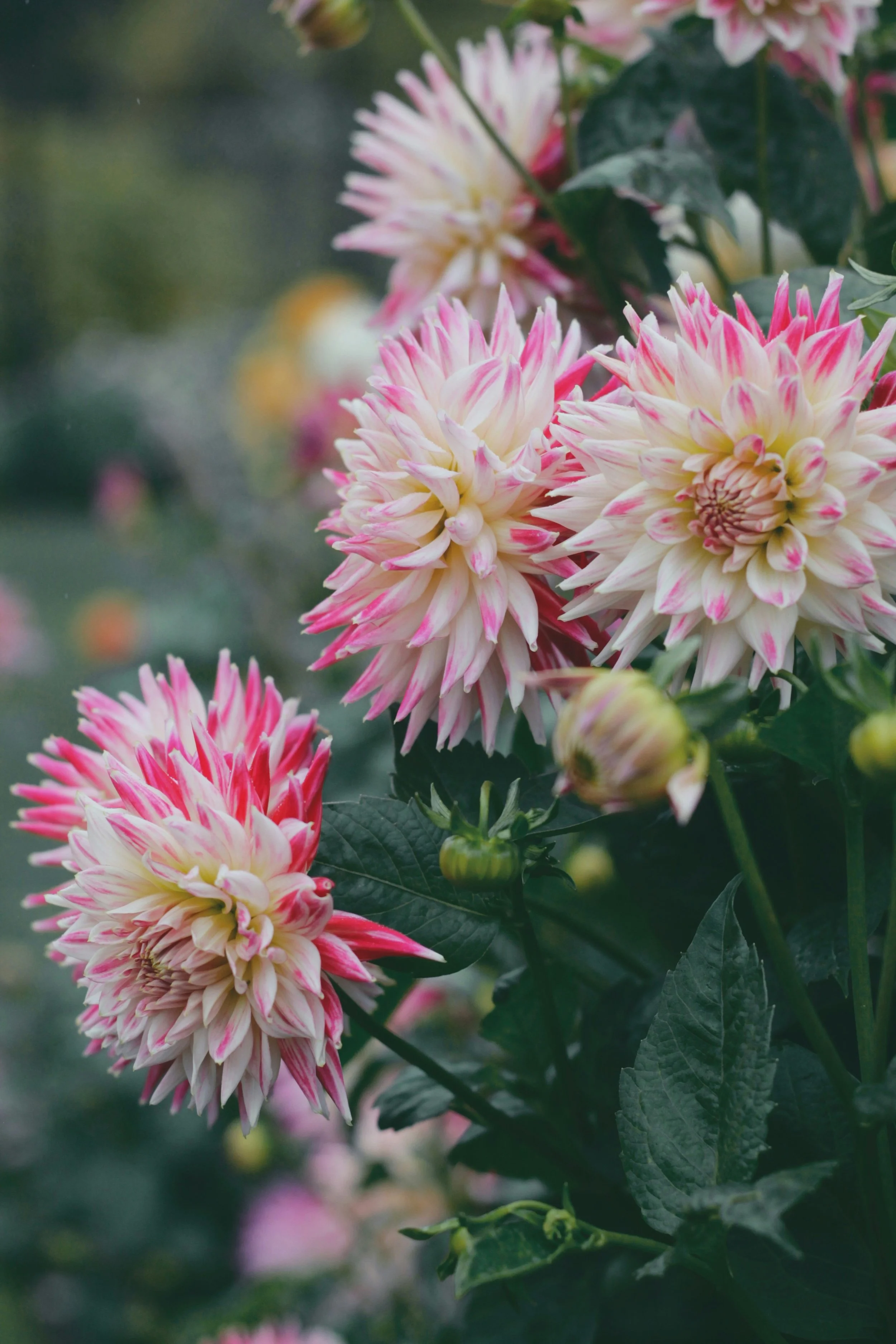
The breathtaking blooms of the Dahlia family.
photo credit: Elena Cosarca
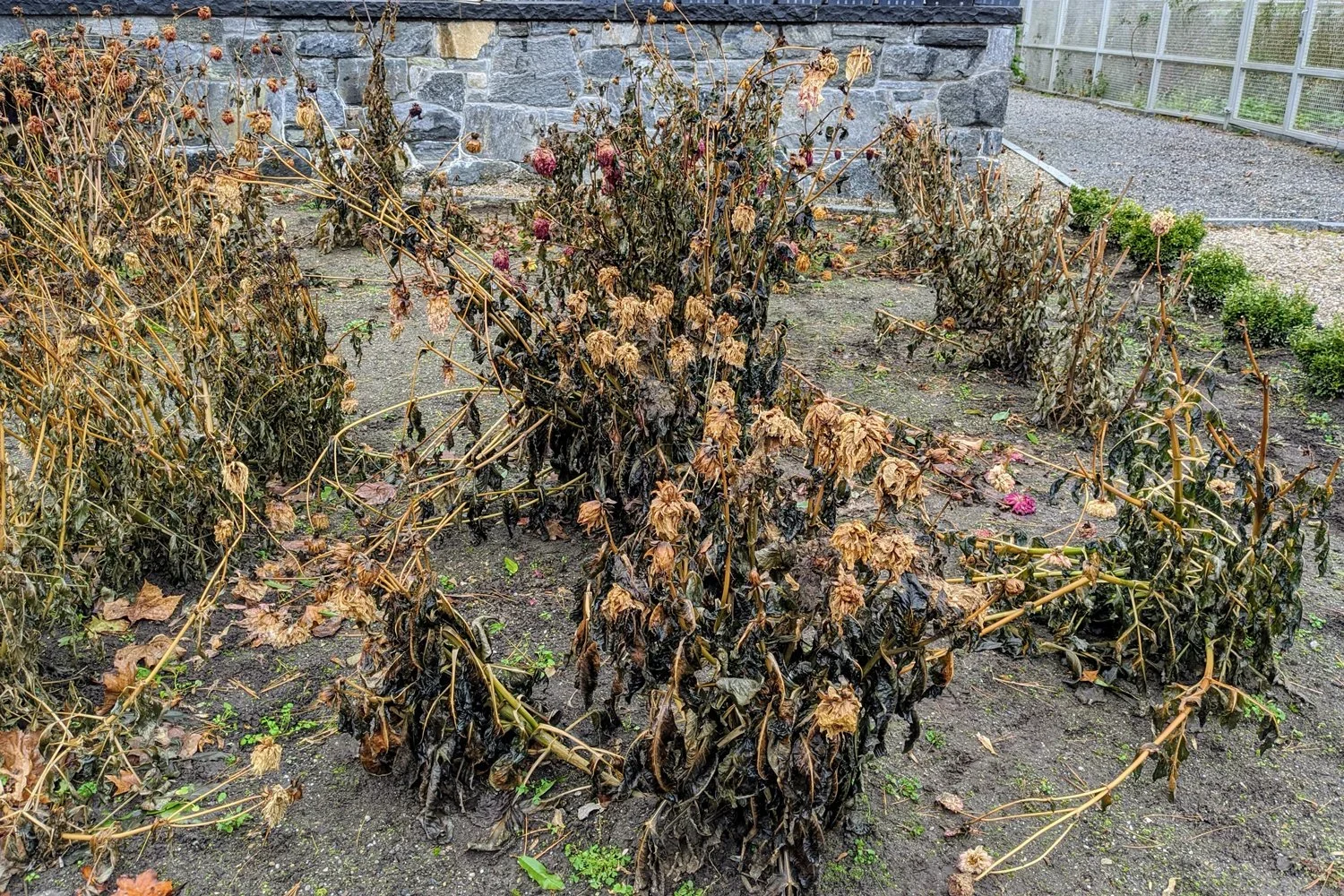
Dahlias after a hard frost.
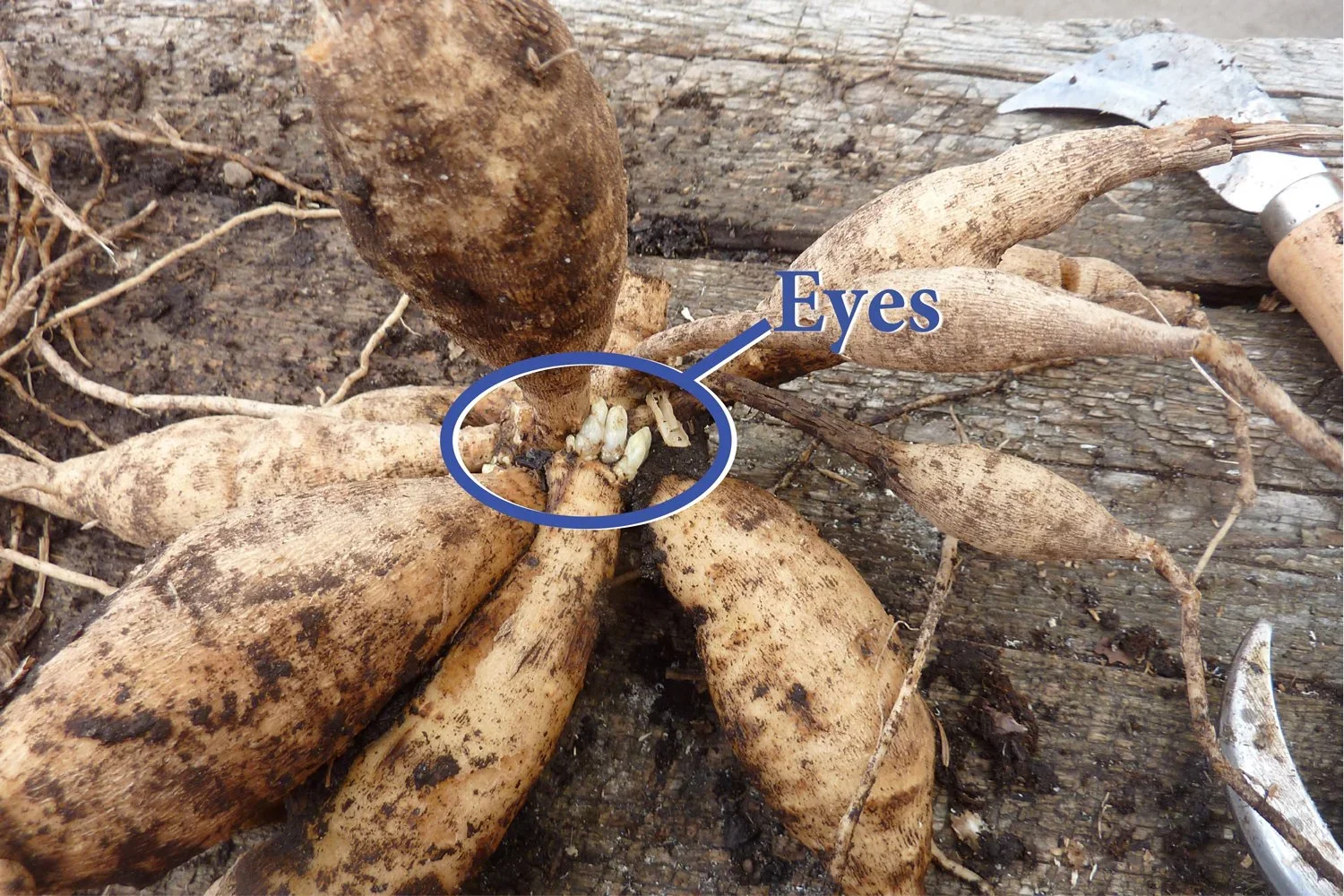
Dahlia tubers after cleaning, showing the “eyes” of next season’s growth.